
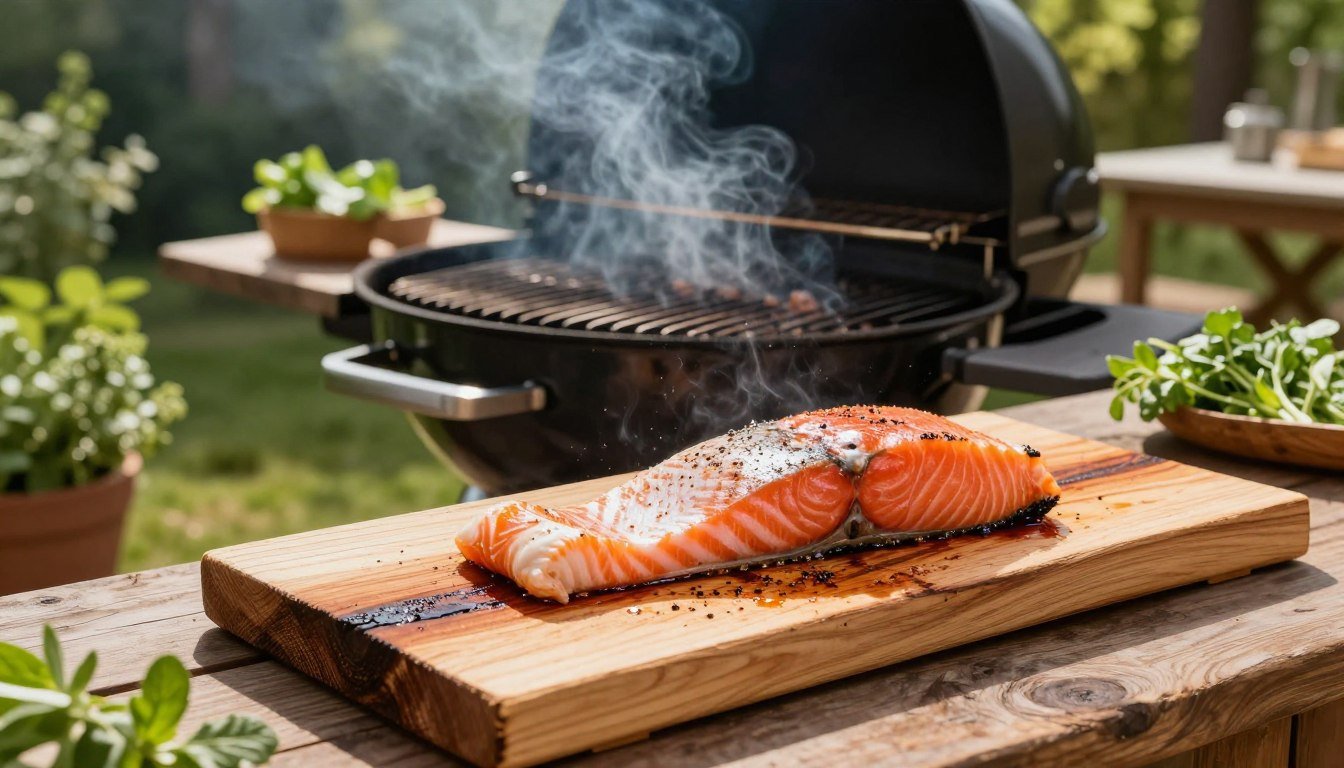
Learn the proper method for grilling salmon on cedar plank for juicy fish.
Ever felt that sinking heart when dinner falls apart just before serving? Cooking delicate seafood can be a high-stakes gamble. You dream of that perfect, flaky texture but fear overcooking or the fillet sticking to the grate.
You deserve a stress-free experience that brings restaurant-quality results every time. Learning to grill salmon on cedar plank turns your backyard cooking into a culinary success. This method protects your meal from direct heat, adding a gentle, wood-fired aroma.
Using this method keeps natural juices locked in, preventing them from disappearing in the heat. Cedar plank grilling salmon results in a moist, tender dish that will wow your loved ones. Let’s go through the steps to make your next meal unforgettable.
Understanding the Science of Cedar Plank Grilling
Grilling salmon on cedar plank is more than a cooking method; it’s an art that blends flavor and science. When you grill salmon on a cedar plank, the cedar adds a unique smoky flavor. It also keeps the fish moist and tender, preventing it from falling apart. To fully enjoy this technique, understanding its science is key.
The pairing of cedar and salmon is not random. Cedar’s aromatic properties complement salmon’s rich flavor, offering a nuanced and satisfying taste experience.
Why Cedar Enhances Salmon Flavor
Cedar contains oils that release fragrant compounds when heated. These compounds mix with the salmon, boosting its flavor with a smoky, sweet note. The cedar’s scent is especially good with salmon’s fatty acids, making the fish taste more complex.
- The cedar’s aromatic oils complement the salmon’s natural flavor.
- The smokiness from the cedar adds depth to the dish.
- The combination results in a more complex flavor profile.
The Role of Moisture in Plank Cooking
Grilling salmon on cedar plank is great for keeping moisture in. As the plank heats up, it releases steam, cooking the salmon gently and keeping it juicy. This method stops the fish from drying out, a common problem with other grilling methods.
Moisture retention is crucial for the perfect texture in. The steam from the cedar plank makes the fish tender and flaky, not tough and dry.
- The cedar plank releases steam when heated.
- This steam helps to cook the salmon gently.
- The result is a moist and tender piece of fish.
Selecting the Right Cedar Planks and Salmon
The secret to a tasty cedar plank grilled salmon recipe is in the cedar planks and salmon. Knowing what to look for in both is key.
Choosing Untreated Food-Grade Cedar
Choosing the right cedar planks is crucial. Look for untreated food-grade cedar planks made for grilling. Western Red Cedar is best because it’s safe for cooking and resists rot and insects.
Here are some tips for picking the right cedar planks:
- Make sure they’re labeled as “food-grade” or “for grilling.”
- Stay away from planks treated with chemicals or with a glossy finish.
- Choose planks that are thick enough to handle the grill’s heat without burning.
| Cedar Plank Characteristics | Importance for Grilling |
|---|---|
| Untreated and Food-Grade | Ensures safety and avoids chemical contamination. |
| Western Red Cedar | Provides the traditional flavor and aroma associated with cedar plank grilling. |
| Thickness | Affects the plank’s durability on the grill and prevents it from catching fire. |
Identifying High-Quality Salmon Fillets
For a tasty cedar plank grilled salmon, the salmon’s quality matters as much as the cedar. Choose fresh salmon with a good texture and look.
Here are some signs of high-quality salmon fillets:
- Freshness: They should smell fresh, not too fishy.
- Texture: The flesh should be firm and have a bright color.
- Thickness: Go for fillets at least 1 inch thick to stay juicy.
By picking the right cedar planks and salmon, you’re set for a memorable cedar plank grilled salmon dish. Follow these tips for grilling salmon on cedar plank to improve your grilling skills.
Preparing Your Cedar Planks for the Grill
Before grilling, it’s key to prepare your cedar planks right. This ensures your food tastes great and is safe to eat. Soaking the planks is a must.
The Importance of Soaking Time
Soaking your cedar planks is not just a tip; it’s a must. It stops the cedar from catching fire on the grill. Soak them for at least 1 hour, but overnight is even better. This makes sure the planks are wet, which helps prevent flare-ups and keeps the food moist.
The wet cedar plank helps cook the salmon evenly and keeps it juicy. It also adds a smoky flavor that cedar plank grilling is famous for. The longer the planks soak, the more they flavor the salmon.
Adding Aromatics to the Soaking Water
To make your salmon taste even better, add aromatics to the soaking water. Lemon slices, garlic cloves, and fresh herbs like thyme or rosemary work well. These flavors mix into the cedar, which then flavors the salmon as it cooks.
Here’s a simple guide to get you started with adding aromatics:
| Aromatic | Quantity | Effect on Flavor |
|---|---|---|
| Lemon Slices | 2-3 slices | Adds a citrusy freshness |
| Garlic Cloves | 2-3 cloves | Provides a savory depth |
| Fresh Herbs (Thyme/Rosemary) | A few sprigs | Infuses a herbaceous note |
By preparing your cedar planks well and adding aromatics, you can make your cedar plank salmon taste amazing. This effort is what makes easy cedar plank salmon grilling possible, even for beginners.
Essential Tools for Grilling Salmon on Cedar Plank
grilling salmon on cedar plank requires the right tools. You need the right grill and accessories for a perfect dish. Focus on the grill setup and tools for safe, efficient cooking.
Grill Equipment and Temperature Control
A consistent temperature is key for grilling salmon on a cedar plank. Grills with temperature control are best. They let you adjust the heat for cedar plank cooking.
- A gas grill with multiple burners helps maintain the right temperature.
- Charcoal grills require skill but add a smoky flavor to salmon.
- A grill thermometer is crucial for checking the temperature, keeping it ideal for salmon.
Safety Gear and Handling Utensils
Safety is paramount when grilling. Heat-resistant gloves protect your hands from burns. Long-handled tongs and spatulas are needed for safe salmon handling.
- Heat-resistant gloves for protecting your hands.
- Long-handled tongs for turning the salmon.
- A spatula for safely removing cooked salmon from the plank.
With the right grill and safety gear, you’re ready to grill delicious cedar plank salmon.
Crafting the Perfect Salmon Marinade and Rub
To elevate your cedar plank salmon, focus on a great marinade and rub. These can enhance the natural flavors of your grilling salmon on cedar plank. This makes your dish unforgettable.
Culinary experts say, “A good marinade does more than add flavor. It also improves the fish’s texture.”
“The right balance of ingredients in a marinade can make all the difference in achieving tender, juicy salmon.”
Balancing Sweet and Savory Flavors
It’s important to balance sweet and savory flavors in your marinade. Mix soy sauce, brown sugar, and citrus juice for this. For instance, a marinade of soy sauce and brown sugar, with lemon juice and garlic, offers a rich taste.
Dry Rub Techniques for Crispy Edges
A dry rub adds a nice crunch to your salmon’s edges. This contrasts well with the soft flesh inside. To make a dry rub, combine spices like paprika, garlic powder, and brown sugar. Coat the salmon evenly with it for the best cedar plank salmon recipe.
Let the salmon sit for a few minutes after applying the dry rub. This allows the seasonings to soak in. This simple step greatly improves your grilling salmon on cedar plank flavor and texture.
Step-by-Step Guide to Grilling Salmon on Cedar Plank
To get the perfect cedar plank salmon, just follow these easy steps. It’s all about the right steps to make a tasty grilled fish.
Preheating the Grill and Preparing the Plank
First, heat your grill to medium-high, about 400°F to 425°F. While it heats up, soak your cedar plank. A soaked plank helps prevent it from burning while grilling.
Tip: For a gas grill, preheat with the lid closed. If you have a charcoal grill, spread the coals evenly for even heat.
Placing the Salmon and Managing Heat
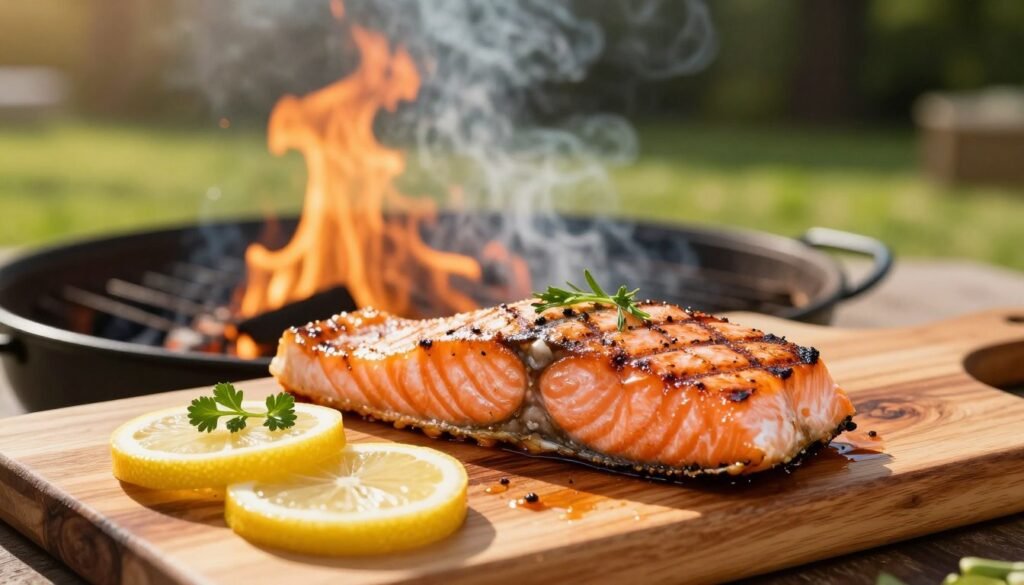
When the grill is hot, put the plank on the grates, close the lid, and heat for 3-5 minutes. You’ll smell cedar and see a char on the plank. Then, put your salmon on the plank, skin side down if it has skin.
- Adjust the grill vents to keep the temperature steady.
- Keep the grill lid closed to trap heat and smoke.
Monitoring Internal Temperature for Juiciness
For juicy salmon, cook it to the right internal temperature. Use a meat thermometer to check. Aim for 125°F to 130°F for medium-rare.
Remember, the salmon will cook a bit more after it’s off the grill. So, it’s safer to cook it a bit less.
Mastering Heat Management on Gas and Charcoal Grills
Grilling salmon on cedar plank needs a good grasp of heat management. This prevents flare-ups and overcooking. It ensures your salmon is cooked just right, keeping its moisture and soaking up cedar flavors.
Grilling’s success depends on the heat type. There are direct and indirect heat methods. Knowing the difference is key for great results with grilling salmon on cedar plank .
Direct Versus Indirect Heat Methods
Direct heat puts the cedar plank right over the flames. It’s perfect for a char on the salmon and smoky taste. But, you must watch it closely to avoid the plank catching fire.
Indirect heat cooks the salmon on a plank not over the flames. It’s safer and cooks more evenly. It’s great for thicker salmon or charcoal grills.
Key considerations for direct and indirect heat methods:
- Direct heat: Ideal for thinner salmon fillets and achieving a charred exterior.
- Indirect heat: Suitable for thicker fillets and safer for preventing plank fires.
Preventing Plank Flare-Ups and Fires
Flare-ups and fires are big risks with cedar planks. Soaking the plank well before grilling helps. A soaked plank smolders, adding smoky flavor to the salmon.
Having a water spray bottle nearby helps with flare-ups. Also, watch the grill temperature and adjust it to keep a safe cooking space.
- Soak the cedar plank for at least 1-2 hours before grilling.
- Keep a spray bottle of water handy to control flare-ups.
- Monitor and adjust the grill temperature as needed.
Common Mistakes to Avoid When Using Cedar Planks
To make sure your cedar plank salmon is tasty and moist, know the mistakes to avoid. Grilling salmon on a cedar plank needs careful attention. By knowing the common mistakes, you can make a dish that wows your guests.
Overcooking the Fish
One big mistake is overcooking the salmon. Salmon cooks fast, and the plank keeps cooking it after it’s off the grill. To fix this, use a thermometer. The salmon should be between 125°F and 130°F for medium-rare.
Using Planks That Are Too Dry
Another mistake is using dry cedar planks. Dry planks can burn and make the salmon taste bitter. To avoid this, soak the cedar planks in water for 1-2 hours before grilling. Adding lemon slices or herbs to the water can make the salmon taste even better.
By avoiding these mistakes, you can make a delicious cedar plank salmon. The secret to success is in the preparation and paying close attention while cooking.
Creative Variations for Cedar Plank Salmon
grilling salmon on cedar plank on a cedar plank opens up a world of possibilities in the kitchen. You can try out different flavors and methods to make a dish that you’ll love.
Infusing Flavors with Citrus and Herbs
To add flavors to your cedar plank salmon, use citrus and herbs. Place slices of lemon or orange in the water or put herbs like thyme on the plank. These will make the salmon taste even better.
- Try using different citrus fruits like grapefruit or lime for a unique twist.
- Experiment with various herbs such as parsley, dill, or basil to find your favorite combination.
Glazing Techniques for a Professional Finish
Glazing can make your cedar plank salmon taste and look amazing. A glaze made from honey, soy sauce, and maple syrup can give it a sweet, caramelized crust. Just brush the glaze on the salmon during the last few minutes of grilling.
Some popular glaze ingredients include:
- Balsamic vinegar and brown sugar for a sweet and tangy flavor.
- Soy sauce and ginger for an Asian-inspired taste.
- Honey and Dijon mustard for a classic, slightly sweet glaze.
For a visual guide, consider the following image:
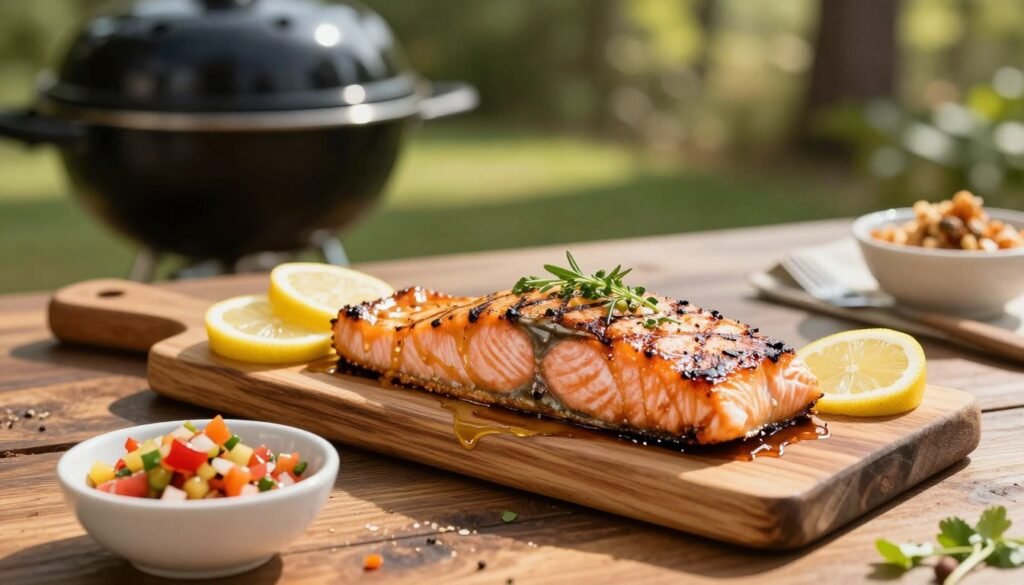
By adding these creative touches to your cedar plank salmon recipe, you can make a best cedar plank salmon recipe that tastes great and looks good too.
Pairing Sides to Complement Smoky Salmon
Choosing the right sides is key to a great meal. You want to balance the smokiness of the salmon with sides that enhance its flavor. This way, the salmon’s taste shines without being overpowered.
Grilled Vegetables and Seasonal Salads
Grilled veggies are a perfect match for smoky salmon. Vegetables like asparagus, bell peppers, and zucchini get a smoky flavor from grilling. Just brush them with olive oil, season, and grill until tender.
Seasonal salads also work well. A salad with mixed greens, cherry tomatoes, and a light vinaigrette offers a refreshing contrast. Use seasonal ingredients like heirloom tomatoes in summer or roasted butternut squash in fall for variety.
Celebrity chef Ina Garten says, “You can’t go wrong with a simple salad.” A well-made salad is a great side for smoky salmon. Here’s a simple recipe:
“Mix arugula, sliced pears, crumbled blue cheese, and toasted walnuts. Drizzle with olive oil and apple cider vinegar vinaigrette.” – Ina Garten grilling salmon on cedar plank.
Grains and Starches That Absorb Smoke
Grains and starches soak up the smoky flavor of salmon, making them great sides. Quinoa, wild rice, and roasted potatoes are tasty and absorb the salmon’s juices cedar plank grilling salmon.
Here’s a comparison of grains and starches as sides:
| Grains/Starches | Smoke Absorption | Flavor Profile |
|---|---|---|
| Quinoa | High | Nutty, slightly sweet |
| Wild Rice | High | Earthy, slightly smoky |
| Roasted Potatoes | Medium | Crunchy outside, fluffy inside |
Think about the texture and flavor of grains or starches to match the salmon. Wild rice’s earthy taste goes well with smoky salmon. Roasted potatoes add a nice crunch.
Cleaning and Reusing Cedar Planks
To keep your cedar planks in good shape and safe for grilling, cleaning and care are key. After grilling salmon on a cedar plank, you can reuse it if you clean it right. Proper cleaning keeps your planks lasting longer and stops harmful bacteria from growing.
“Cedar planks can be reused many times if cleaned and cared for properly,” a grilling expert notes. This method saves money and is good for the environment.
When to Discard a Used Plank
Not every cedar plank can be used forever. It’s important to check your planks after each use to see how they’re doing. If a plank is too charred, has big cracks, or shows mold, it’s time to throw it away. Regular checks help keep your cedar planks safe to use.
- Look for deep cracks or splits that could hide bacteria.
- Check for mold or mildew signs.
- If the plank is very charred or weak, it’s time to get a new one.
Sanitizing Planks for Future Use
To sanitize your cedar planks, first remove any leftover food. Then, wash the plank with mild soap and warm water. For a deeper clean, soak it in a mix of 1 part white vinegar to 2 parts water for an hour. Let the plank dry completely before storing it in a dry spot.
Sanitizing your cedar planks is easy and keeps them ready for future use. By doing this, you can enjoy grilling salmon on cedar planks for many meals.
Conclusion
Now you know how to grill salmon on cedar plank. This skill will make your outdoor cooking better. You’ll get a juicy, tasty salmon every time you try.
Choose the right cedar planks and quality salmon fillets for the best taste. Grilling salmon on cedar plank is fun and creative. You can try different marinades, rubs, and glazes.
Pair your grilled salmon with sides that match well. This will make your meal complete and impressive. With more practice, grilling salmon on cedar plank will become easy for you. It will be a favorite dish in your kitchen.
FAQ
How to grill salmon on cedar plank if I only have a small portable grill?
You can still achieve great results! Ensure your plank is trimmed to fit the grate of your Portable Weber grill. Use the indirect heat method by pushing your charcoal to one side and placing the plank on the cooler side to prevent the small space from overheating and causing a fire grilling salmon on cedar plank.
What are the most important cedar plank salmon cooking instructions for beginners?
The most vital step is the soak. Always submerge your Wild Harvest planks for at least two hours. Secondly, never leave the grill unattended; since you are essentially putting wood over fire, you must be ready to manage flare-ups with a water spray bottle grilling salmon on cedar plank.
What is the best cedar plank salmon recipe for a sweet and spicy flavor?
Combine Mike’s Hot Honey with a squeeze of fresh lime and a teaspoon of grated ginger. Brush this mixture onto your Vital Choice salmon fillets before placing them on the plank. The honey caramelizes under the grill’s heat, creating a perfect spicy-sweet crust cedar plank grilling salmon.
Are there any tips for grilling salmon on cedar plank to ensure the skin doesn’t stick?
Even though the plank is wet, a light coating of Bertolli extra virgin olive oil on the wood or the fish skin can help. Additionally, ensuring the plank is preheated until it starts to smoke before adding the fish creates a natural non-stick barrier through the release of steam cedar plank grilling salmon .
How can I achieve easy cedar plank salmon grilling for a large group?
For large gatherings, use extra-large planks from Fire & Flavor that can hold an entire side of salmon rather than individual fillets. This reduces the prep time and allows you to present a stunning, whole smoky fish at the center of the table best cedar plank salmon recipe.
Does a cedar plank grilled salmon recipe work well with frozen fish?
Yes, but you must thaw the fish completely in the refrigerator first. Pat the salmon extremely dry with paper towels before seasoning; excess moisture on the surface of the fish can prevent your rub or marinade from sticking and may result in a mushy texture best cedar plank salmon recipe how to grill salmon on cedar plank.
How do I know if my plank is food-grade?
Look for packaging specifically labeled for cooking from brands like Primal Grilling or Outset. Avoid any wood that is not labeled for culinary use, as it may contain anti-fungal treatments or chemicals used in construction-grade lumber how to grill salmon on cedar plank.