
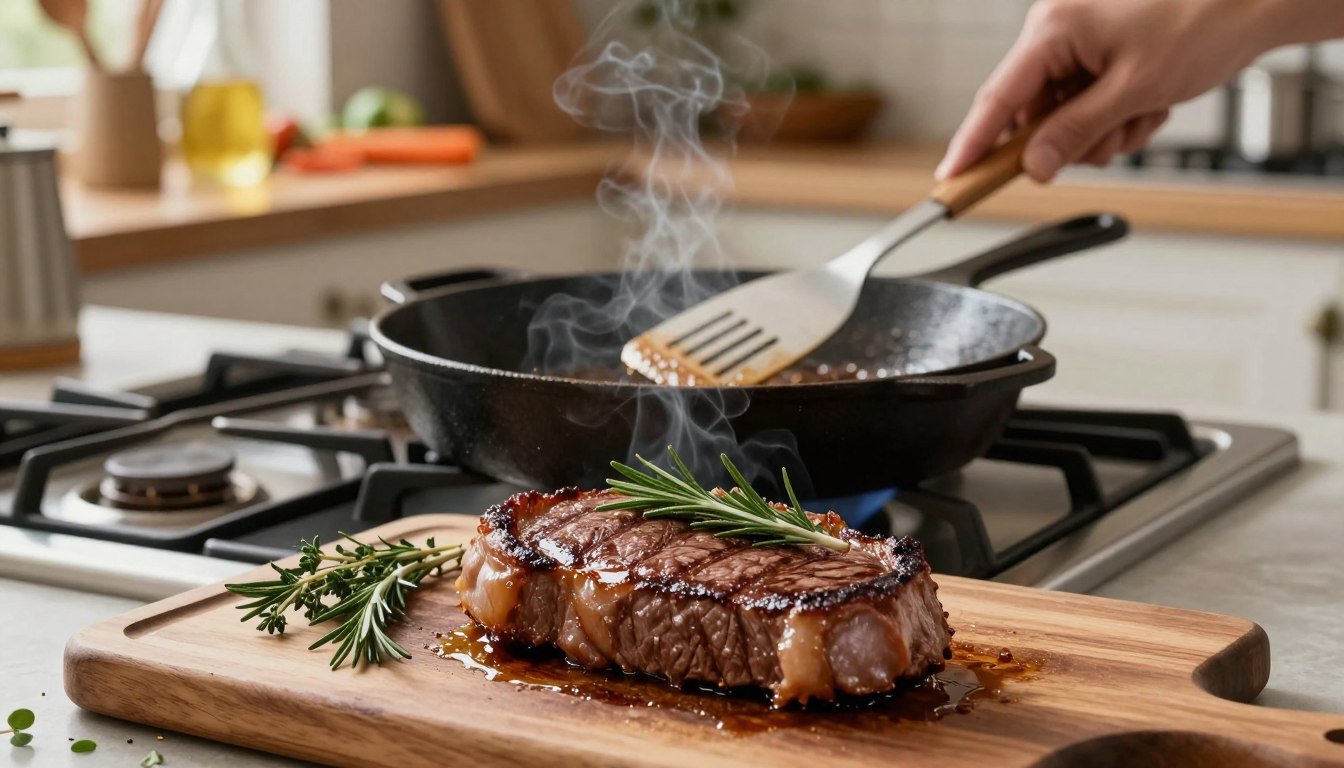
How to Cook Top Round Steak | Simple Guide
Ever stood in the grocery aisle, looking at a budget-friendly cut of meat? Wondered if it could taste like a restaurant-quality meal? You’re not alone. Many home chefs skip this lean, hardworking protein, fearing it will be tough or chewy.
This versatile beef is a hidden gem in your kitchen. When you learn how to cook top round steak the right way, it becomes fork-tender comfort food. Your family will love it. It’s an affordable way to make your dinners special without spending a lot.
In this guide, we’ll cover the basic methods to master this cut. By using these professional tips, you can avoid common mistakes and get a delicious result every time. Get ready to make a simple ingredient the star of your dinner table.
Understanding the Characteristics of Top Round Steak
To cook top round steak well, you need to know where it comes from. It’s from the cow’s rear leg, a part that works a lot. This makes the steak different from fatty cuts like ribeye.
This steak is lean because it has little fat. It’s a healthier choice but can be tough. Knowing this helps you cook it better.
Why Top Round is a Lean Cut
Top round steak is lean, with very little fat. This is good for those watching their fat intake. But, it can be dry if cooked too long.
- Minimal Marbling: Without fat, the meat can dry out if overcooked.
- Dense Muscle Fibers: The meat’s tight fibers come from the cow’s active rear leg.
- Consistent Shape: Its uniform shape makes it easy to slice, if done right.
The Importance of Proper Preparation
When cooking top round steak, how you prepare it matters a lot. Since it’s lean, you need to add moisture or use special techniques to make it tender.
“The secret to transforming a lean cut lies in respecting its structure through careful preparation and controlled heat.”
Good preparation makes the steak tender and tasty. By marinating or slicing it right, you can make this affordable cut taste like a culinary masterpiece.
Essential Tools and Equipment for Success
Creating a tasty meal at home needs more than just great ingredients. When you focus on top round steak cooking tips, the right tools are key. They help you get professional results in your kitchen.
This cut is lean, so you must be precise when cooking. The right equipment helps manage heat and keeps the beef tender, not tough.
Choosing the Right Skillet or Grill
A perfect sear needs a surface that holds heat well. A heavy-duty cast iron skillet is great for indoor cooking. It spreads heat evenly.
For outdoor cooking, a well-kept grill adds smoky flavor. Make sure the surface is hot enough. This way, you get a flavorful crust without overcooking the meat.
| Equipment Type | Heat Retention | Best Use Case |
|---|---|---|
| Cast Iron Skillet | Excellent | Indoor searing |
| Stainless Steel | Moderate | Pan sauces |
| Charcoal Grill | High | Smoky flavor |
Thermometers and Resting Boards
Accuracy is crucial with lean beef. A digital meat thermometer is vital. It prevents overcooking and keeps the meat juicy.
After cooking, move the steak to a sturdy resting board. Always rest your steak for 5–10 minutes before slicing. This step keeps the juices inside, making every bite juicy and flavorful.
Selecting the Best Quality Meat
Your journey to a perfect dinner starts at the butcher counter. The quality of your protein is key to a great meal. Knowing how to pick the right cut is the best way to cook top round steak every time.
Identifying Freshness and Marbling
When you look at top round, it should be a vibrant, consistent red. Stay away from meat that looks dull, gray, or has too much liquid. Since it’s lean, the meat should feel firm to the touch.
Top round doesn’t have lots of fat like ribeye, but a bit of intramuscular marbling is good. This thin fat helps keep the meat moist. Also, look for even thickness to ensure even cooking.
“Quality is never an accident; it is always the result of high intention, sincere effort, intelligent direction and skillful execution.”
Understanding Beef Grading
Beef grading helps you know the quality. In the U.S., the USDA grades beef as Prime, Choice, and Select. Knowing these labels helps you cook top round steak the best way based on its grade.
USDA Prime has the most marbling, but it’s rare for top round. USDA Choice is popular for home cooks, offering great flavor and tenderness. USDA Select is leaner and might need marinating for tenderness.
Choosing the right grade is crucial for your cooking. Always check the label to get the quality you need for your recipe.
Preparing Your Steak for Maximum Tenderness
Getting your tender top round steak ready is key to a great meal at home. This cut is lean and tasty but can be a bit tough. With the right methods, you can make it as tender as steak from a fancy restaurant.
The Science of Mechanical Tenderization
Mechanical tenderization is a top way to soften round cuts. A meat mallet helps by pounding the beef. This breaks down the tough fibers, making the steak easier to chew.
Using a mallet does the work your teeth would do. This keeps your tender top round steak juicy while it cooks. It’s a fast and effective way to make lean cuts more tender.
Why You Should Slice Against the Grain
How you slice your beef is crucial for a good taste. Cutting with the grain leaves tough strands. But slicing against the grain shortens these fibers, making the meat tender.
Identifying the Grain Direction
To find the grain, look at the raw meat’s surface for lines. These lines show the muscle fibers. Place your knife across these lines to cut against the grain.
| Method | Primary Benefit | Best For |
|---|---|---|
| Mechanical Mallet | Breaks tough fibers | Thin cutlets |
| Cross-Grain Slicing | Shortens muscle strands | Finished steaks |
| Acidic Marinade | Softens surface tissue | Flavor infusion |
Creating the Perfect Marinade
Turning a lean cut of beef into a tender masterpiece starts with the right marinade. Many people focus on cooking, but preparation is key for flavor. A good top round steak recipe starts with a great marinade.
Acidic Components for Breakdown
Lean cuts of beef need acids to soften their tissues. This makes the meat tender and easy to chew. Use apple cider vinegar, lemon juice, or Italian dressing for this.
Using a quality top round steak marinade tenderizes the meat. But don’t overdo it. Too much acid can make the meat mushy. Aim for four to eight hours for the best results.
Flavor Profiles and Aromatics
Your marinade also brings out complex flavors. Add garlic, shallots, or ginger for depth. Fresh herbs like rosemary, thyme, or parsley brighten the taste.
Balance your marinade with fats and sweeteners. Olive oil spreads flavors evenly. Honey or brown sugar creates a caramelized crust when seared.
Recommended Marinade Ingredients
Here’s a table to help you create your own marinade. Each ingredient has a role in your dish’s quality.
| Category | Examples | Primary Function |
|---|---|---|
| Acid | Balsamic Vinegar, Lime Juice | Tenderizes muscle fibers |
| Fat | Olive Oil, Avocado Oil | Carries flavor and prevents sticking |
| Aromatics | Garlic, Onion, Fresh Herbs | Adds depth and complexity |
| Seasoning | Soy Sauce, Worcestershire, Salt | Enhances natural beef flavor |
Seasoning Techniques for Enhanced Flavor
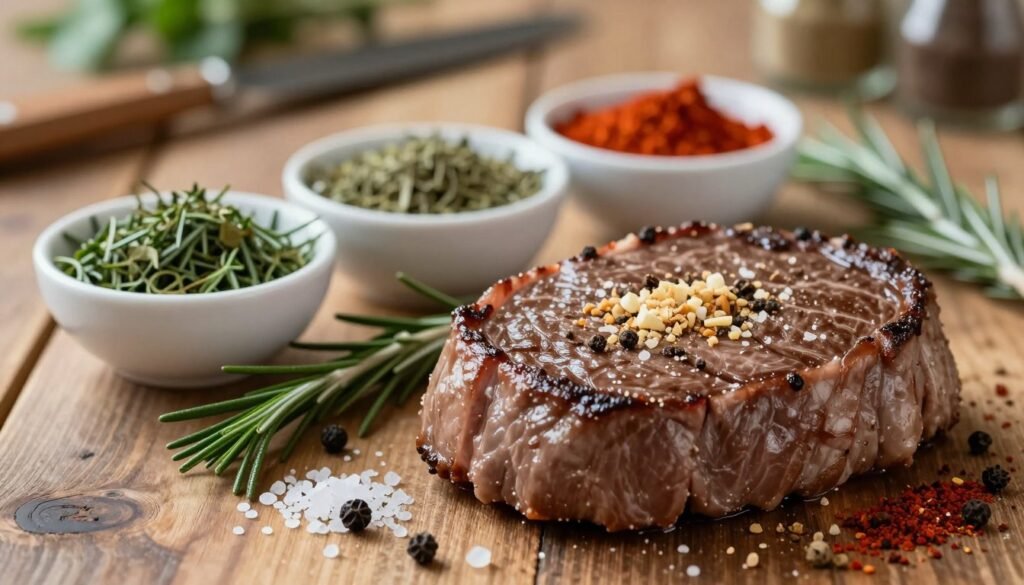
Mastering seasoning is key to making a simple cut taste like a gourmet dish. The way you add flavor affects the meat’s texture and taste. Whether you go for a simple mix or a complex blend, your method matters a lot.
Dry Rubs vs. Wet Seasoning
Deciding between a dry rub and a wet top round steak marinade depends on your flavor goals and cooking method. Dry rubs are great for a flavorful crust when searing at high heat. They mix dried herbs, spices, and brown sugar for a savory taste.
Wet seasoning or marinade is better for deep flavor infusion. Even a short 30-minute soak in an acidic top round steak marinade can improve the steak’s texture. Use vinegar, citrus juice, or yogurt to soften the meat before cooking.
The Role of Salt in Moisture Retention
Salt is crucial in any top round steak seasoning plan. It boosts the beef’s natural taste and keeps juices inside. Salt draws moisture to the surface, which then reabsorbs into the meat with flavor.
For the best seasoning, follow these timing tips:
- Apply salt early: Salting at least 45 minutes before cooking helps the salt penetrate well.
- Avoid premature acidic exposure: If your marinade is acidic, limit the soak time to avoid mushiness.
- Pat dry before searing: Remove excess moisture with a paper towel for a perfect, golden-brown crust.
Proper seasoning turns a simple beef piece into a memorable meal. By balancing dry and wet applications, you ensure every bite is flavorful and tender.
How to Cook Top Round Steak Using Pan-Searing
Want to know how to cook top round steak with a perfect crust? Pan-searing is the way to go. It’s great for thinner cuts or pieces that have been marinated well. A heavy-bottomed skillet helps lock in juices and creates a beautiful, caramelized exterior in just a few minutes.
Achieving the Perfect Crust
The secret to a professional-looking sear is moisture control. Pat your meat dry with paper towels before cooking. This ensures the surface browns instead of steaming. Apply your top round steak seasoning just before cooking for a flavorful, crunchy bark.
Make sure your skillet is very hot before adding the beef. A cast-iron pan is best because it keeps heat well. Don’t overcrowd the pan, as this lowers the temperature and prevents a good sear.
Managing Heat Levels
Controlling your burner is key with lean cuts. Start with high heat for the crust, but be ready to lower it if it gets too dark. This balance helps the center cook to your liking without burning the outside.
Use this guide to adjust your cooking based on the steak’s thickness:
| Steak Thickness | Heat Setting | Estimated Sear Time |
|---|---|---|
| 0.5 inch | High | 2 minutes per side |
| 1.0 inch | Medium-High | 4 minutes per side |
| 1.5 inches | Medium | 6 minutes per side |
Always check the internal temperature with a digital thermometer for accuracy. Learning how to cook top round steak takes patience, but mastering heat adjustments will give you tender, juicy results every time.
Alternative Cooking Methods for Top Round
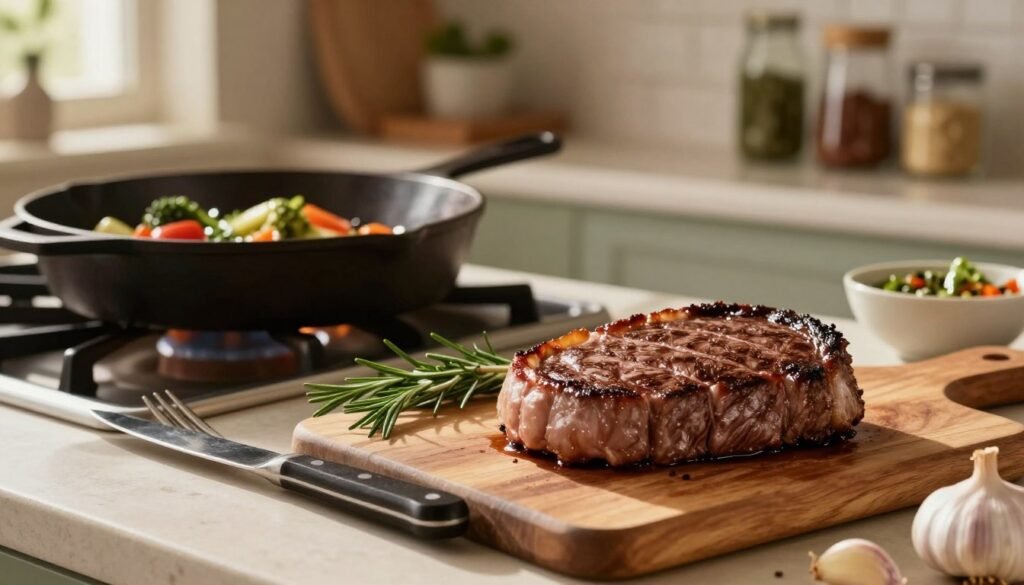
Trying new ways to cook your dinner can be exciting. While many stick to quick searing, exploring other methods can make any top round steak recipe easier. These techniques fit well into a busy schedule.
Slow Cooking and Braising Techniques
Slow cooking and braising are great when you have more time. They make your meat tender by using moist heat. This method breaks down tough fibers in the beef.
Using a crockpot or a covered pot in the oven with broth creates a rich flavor. It changes the meat’s texture for the better.
“Cooking is at once child’s play and adult joy. And cooking done with care is an act of love.”
This method is perfect for those who like to relax while cooking. Just set your ingredients to simmer and let the flavors mix for hours. The result is a tender meal that’s great for a hearty top round steak recipe.
Using the Oven for Reverse Searing
The reverse sear method is great for those who like control. Start by putting your meat in a low-temperature oven until it’s just right inside. This ensures even cooking from edge to edge.
After the beef is cooked, sear it quickly in a hot pan. This final step adds a tasty crust while keeping the inside juicy. Adding this technique to your next top round steak recipe will impress your guests.
Top Round Steak Cooking Tips for Juicy Results
Getting a juicy top round steak is easy with the right techniques. This cut is lean, so it needs careful attention to temperature and rest time. Follow these top round steak cooking tips for a delicious meal every time.
The Importance of Resting Your Meat
Resting your meat is key when cooking top round steak. After removing it from heat, let it sit for 5 to 10 minutes. This lets juices spread evenly through the meat.
Don’t cut into the meat too soon. If you do, the juices will spill out, not stay in the steak. Patience is crucial to keep the meat moist and tender.
Avoiding Overcooking
Top round steak dries out quickly if overcooked. Use a meat thermometer to check the internal temperature. Take the steak off the heat just before it reaches your desired temperature.
Here’s a quick guide to perfect doneness without losing quality:
| Doneness Level | Internal Temp (F) | Texture Profile |
|---|---|---|
| Rare | 120°F – 125°F | Very soft and red |
| Medium-Rare | 130°F – 135°F | Warm red center |
| Medium | 140°F – 145°F | Firm with pink center |
| Medium-Well | 150°F – 155°F | Mostly brown, less juicy |
Remember, precision is key when cooking lean beef. Watch your thermometer closely to avoid overcooking. This is the main reason for tough, dry meat.
Common Mistakes to Avoid When Preparing Beef
Getting a restaurant-quality meal at home means avoiding common mistakes. Even with the best ingredients, small errors can ruin the dish. By improving your cooking skills, you can make every meal a hit.
Cooking Cold Meat Directly from the Fridge
One big mistake is putting cold beef straight into a hot pan. Cold meat quickly loses heat, making it hard to get a good sear. This leads to a gray, unappealing crust instead of a golden one.
To get a juicy top round steak, let the meat warm up for 20 to 30 minutes before cooking. This lets the meat relax and heat spreads evenly. Being patient at this step is key to getting professional results.
Crowding the Pan
Another mistake is cooking too much meat at once. When the pan is too full, the meat steams instead of sears. This makes the meat tough and lacking in flavor.
Make sure to leave enough space between each piece for good airflow and browning. Cooking in smaller batches keeps the heat high for a tender top round steak. Avoiding these mistakes will greatly enhance your beef dishes’ texture and taste.
Conclusion
Learning to make budget-friendly beef taste like a gourmet meal is a great skill. You now know how to pick, prepare, and sear meat well. This lets you cook top round steak to perfection without spending a lot.
Keep practicing to get better at cooking. You might like slow-cooking for a cozy Sunday dinner or quick pan-searing for a fast weeknight meal. Try different marinades and dry rubs to find flavors you love.
Cooking top round steak well takes patience and focus. Paying attention to heat and resting times keeps your steak juicy and tender. Share your best dishes with loved ones to show off your cooking skills.
Make sure your kitchen tools are sharp and your thermometer is ready for your next meal. You’re all set to make simple ingredients into amazing dishes. Enjoy making meals that bring people together at your table.
FAQ
What is the best way to cook top round steak to keep it from being tough?
To avoid toughness, marinate the steak for a long time or use the reverse sear method. It’s a lean cut, so keep it to medium-rare. Always slice against the grain for tenderness.
Can you provide a simple top round steak recipe for beginners?
Start with a marinade of soy sauce, olive oil, and lemon juice for 4 hours. Pat dry, season with salt and pepper, then sear in a cast-iron skillet for 3-4 minutes per side until it reaches 130°F.
What are your top round steak cooking tips for a juicy result?
For juiciness, never skip the resting phase. Let the meat sit for 10 minutes after cooking. Use a meat thermometer to avoid cooking past 140°F (medium) to prevent moisture loss.
How long should I leave a top round steak marinade on the meat?
Marinate for at least 2 hours, but 6 to 8 hours is best. This allows the acidic marinade to soften the dense muscle fibers.
What is the most effective top round steak seasoning?
Simple salt and pepper work well, but a robust seasoning includes garlic powder, onion powder, and dried thyme. A dry rub helps create a savory crust during pan-searing.
Is top round steak the same as London Broil?
“London Broil” is a cooking method, not a specific cut. Top round steak is the most common cut used for it. People often search for how to cook top round steak for a London Broil.
Can I cook top round steak in a slow cooker?
Yes, slow cooking top round steak is a great way to handle its toughness. Simmer it in liquid for 6-8 hours on low to break down connective tissue, resulting in a tender and flavorful dish.