
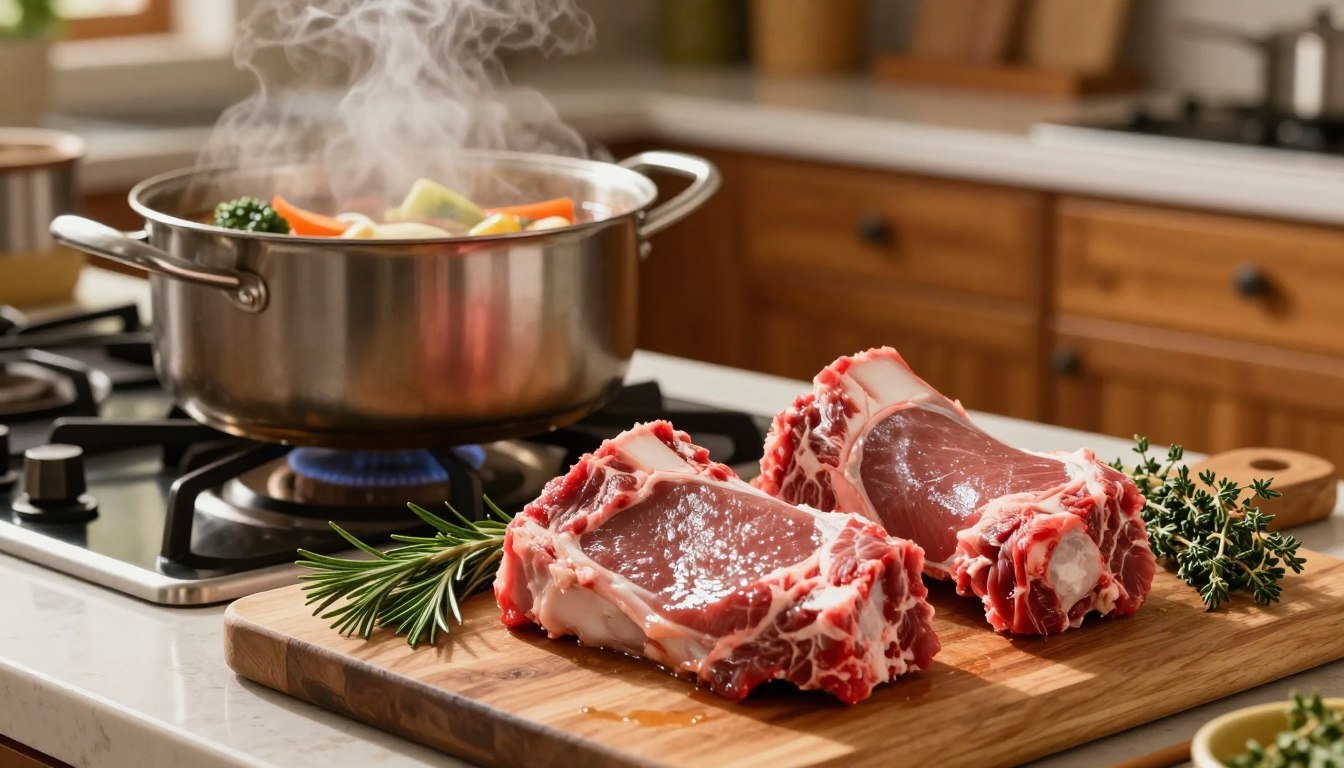
Ultimate Guide: How to Cook Beef Shanks with Bone for Tender, Juicy Meat
Imagine a slow Sunday afternoon filled with the smell of a hearty meal. You want something that feels like it’s melting in your mouth. This dish turns a simple cut into a masterpiece, connecting us to home and family.
This dish offers bold flavors without complicated techniques. It’s ideal for relaxed weekends, offering a comfort meal that’s a bit fancy. The right cooking methods can make tough cuts into something truly special.
Braising is a key to perfection. It lets the bone release deep flavors and the meat becomes soft. Mastering beef shanks means every bite is rich and satisfying for all.
Key Takeaways
- Bone-in preparation adds a rich, deep flavor to the sauce.
- Low and slow heat is the secret to achieving soft textures.
- Braising is the most reliable technique for handling tough cuts.
- Simple steps can create a high-end dining experience at home.
- Patience is the primary ingredient for a truly perfect meal.
Understanding Beef Shanks and Why Bone-In Matters
To cook https://amzn.to/3PbuscJbeef shanks well, you need to know what they are and why cooking with the bone is key.
What Are Beef Shanks
Beef shanks come from the cow’s lower leg. This part is tough because it’s used a lot, making the meat flavorful.
The meat is tough because it has a lot of connective tissue. This tissue needs slow cooking to soften.
As Chef John once said, “The beauty of beef shanks lies in their potential to become tender and rich when cooked low and slow.”
When cooked slowly, the meat becomes tender and the flavors in the bone and tissue come out.
The Role of Bone Marrow in Flavor and Richness
The bone marrow in beef shanks is key to the dish’s flavor and richness.
As the shank cooks, the marrow melts into the sauce. This adds a deep, rich flavor that’s hard to get with other meats.
The marrow’s fatty content makes the meat taste better and helps it become tender.
Why This Cut Requires Long, Slow Cooking
Beef shanks can’t be cooked quickly because they’re too tough.
They need slow cooking to soften the connective tissues. This makes the meat tender and easy to shred.
This slow cooking method is called braising. It involves cooking the shanks in liquid over low heat for a long time.
The slow cooking lets the meat soak up all the flavors from the liquid and the bone marrow. This makes the dish tender and full of flavor.
Knowing about beef shanks and the importance of cooking with the bone helps you make delicious, rich dishes.
Selecting the Best Beef Shanks for Your Recipe
The success of your beef shank recipe depends on the quality of the beef shanks. At the butcher or supermarket, knowing what to look for is key. It affects the tenderness and flavor of your dish.
What to Look for in Quality Beef Shanks
Choose beef shanks with a deep red color. Avoid those that look brown or gray, as they may be older and tougher. The meat should have marbling (small white fat streaks) for flavor and moisture during cooking.
Marbling is important. It makes the meat taste better and become tender as it cooks. Look for a generous amount of marbling in a good beef shank.
Ideal Thickness and Marbling
The ideal beef shank is 1 to 1.5 inches thick. This thickness ensures even cooking and tenderness. Also, a good amount of marbling is key. It makes the meat juicy and flavorful as it cooks.
- Look for a deep red color.
- Ensure there’s visible marbling throughout the meat.
- Opt for shanks that are 1 to 1.5 inches thick.
How Much to Buy Per Person
When deciding how much beef shank to buy, plan for about 1 pound per serving. This can change based on how hungry people are and if you’re serving other dishes too.
For a more accurate count, think about the size of the shanks and how many you need. For example, for four people, you might choose two larger shanks or three to four smaller ones. This depends on their size and your guests’ appetites.
Preparing Your Beef Shanks Before Cooking
Getting your beef shanks ready is key to tender and tasty results. The right steps before cooking make a big difference. They ensure your beef shanks turn out perfectly.
Trimming and Patting Dry
First, check your beef shanks for extra fat or connective tissue. Some fat is good for flavor, but too much makes the dish greasy. Trim off the excess fat carefully, without losing too much meat.
After trimming, pat the meat dry with paper towels. This step is important. Moisture on the surface stops the meat from browning well and getting that golden crust.
Seasoning Techniques for Maximum Flavor
Seasoning is a must-do step. Use a mix of salt, pepper, and herbs and spices. Rub the seasoning all over the beef shanks, making sure they’re evenly coated.
For even more flavor, marinate the beef shanks in your favorite mix. Let them sit in the fridge for a few hours or overnight.
The Importance of Searing
Searing the beef shanks before slow cooking is crucial. It adds depth and richness to the dish. It also creates a crust that keeps juices and flavors inside.
To sear well, heat a skillet or Dutch oven over high heat. Add a bit of oil, then brown the beef shanks on all sides. Do this quickly to avoid overcooking the meat.
Building Your Aromatics Base
An aromatics base is key to a flavorful sauce. Use onions, carrots, celery, and garlic. Chop them finely and sauté them in the pot used for searing. This step boosts the dish’s flavor.
| Aromatic | Description | Flavor Contribution |
|---|---|---|
| Onions | Chopped or sliced, caramelized for sweetness | Adds a sweet, savory flavor |
| Carrots | Sliced or diced, adds color and texture | Provides a subtle sweetness |
| Celery | Diced, for freshness and depth | Contributes a fresh, herbal note |
| Garlic | Minced, for pungency | Adds a rich, savory depth |
Essential Ingredients and Liquids for Braising
The secret to tender beef shanks is in the braising liquids and ingredients. The cooking liquid is key. It tenderizes the meat and adds flavor.
Choosing the Right Cooking Liquid
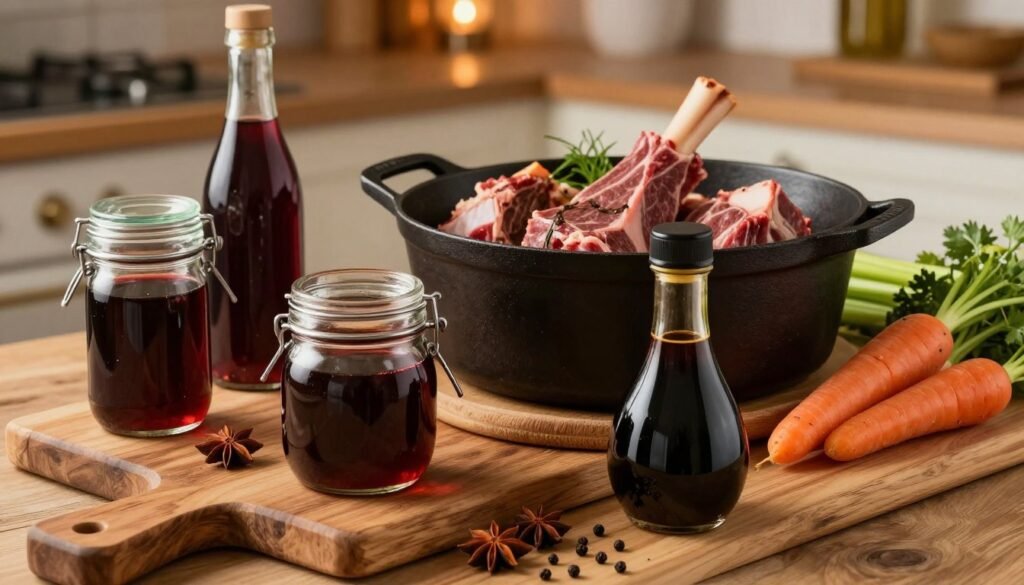
The cooking liquid is the heart of a great braise. You can pick from many liquids, but mixing them is often best. A mix of dry white wine and beef stock creates a rich flavor profile.
The wine’s acidity breaks down the meat’s connective tissues. The stock adds depth to the flavor.
Aromatic Vegetables That Enhance Flavor
Aromatic vegetables are vital in braising. Onions, carrots, and celery are top picks. They provide a balanced flavor base.
These veggies, known as a mirepoix, are sautéed first. This brings out their natural sweetness and depth.
Herbs and Spices That Complement Beef
Herbs and spices add depth to the dish. Fresh herbs like thyme, bay leaves, and parsley are favorites for beef shanks. They add aromatic complexity.
Spices and seasonings can be adjusted to taste. But classics like black pepper, garlic, and sometimes tomato paste are common.
How to Braise Beef Shanks on the Stovetop
Stovetop braising is a classic way to cook beef shanks. It makes the meat rich and comforting. This method lets you control the cooking closely, ensuring perfect results.
Sear the Beef Shanks
Start by heating a large pot or Dutch oven over medium-high heat. Sear the beef shank pieces on all sides until they’re golden brown, about 3 to 4 minutes per side. This step is key for building flavor. Use tongs or a slotted spoon to remove the browned beef shanks and set them aside.
Sauté Your Aromatics
Lower the heat to medium and add more oil if needed. Then, sauté onions, carrots, and celery until they’re softened and fragrant. This step adds depth to the dish, making the sauce rich and savory.
Add Liquid and Bring to a Simmer
Put the beef shanks back in the pot. Add enough liquid (like stock or wine) to cover the meat. Bring it to a simmer, then cover the pot. This is where the magic happens, as the low heat and moist environment tenderize the beef.
Maintain Low Heat for 2.5 to 3 Hours
Lower the heat to low and let the beef shanks cook for 2.5 to 3 hours. The slow cooking breaks down the connective tissues, making the meat tender and falling off the bone.
Test for Tenderness
After 2.5 to 3 hours, test the beef shanks for tenderness. Insert a fork or knife. If it’s not tender, cover the pot and simmer for another 30 minutes before checking again.
| Cooking Time | Tenderness Level | Additional Tips |
|---|---|---|
| 2.5 hours | Moderately tender | Check for tenderness; if needed, continue cooking. |
| 3 hours | Very tender | Meat should easily fall off the bone. |
Cooking Beef Shanks in a Slow Cooker
Slow cookers make braising beef shanks easy. This method is great for busy days because it’s hands-off.
Layering Ingredients Properly
Layering ingredients right is key for the best results. Start with a layer of onions, carrots, and celery at the bottom. Then, put the seared beef shanks on top.
Next, pour in your cooking liquid, making sure the beef is mostly covered. This way, flavors spread evenly and the meat gets tender.
Low vs. High Setting Guidelines
The slow cooker has two settings: low and high. For beef shanks, the low setting is best. It cooks the meat gently for a longer time.
- Cooking on low: 7–8 hours for tender, fall-off-the-bone results.
- Cooking on high: 4–5 hours, though the meat may not be as tender.
Timing for Fall-Off-the-Bone Results
Cook the beef shanks on the low setting for 7–8 hours. This long cooking time breaks down the connective tissues, making the meat tender and flavorful.
After cooking, check if the beef is tender. If not, cover and cook for another 30 minutes to 1 hour.
Using an Instant Pot or Pressure Cooker
Using an Instant Pot or pressure cooker changes the game for cooking beef shanks. These appliances cook food faster by using high pressure. This makes the beef shanks tender in a short time, unlike traditional braising methods.
Setting Up for Pressure Cooking
To begin, set up your Instant Pot or pressure cooker. Start by searing the beef shanks in the pot if it has a sauté function. This step is key for rich flavors in braised dishes.
After searing, add your aromatics like onions, carrots, and celery. These add to the flavor. Then, add your liquid (stock or wine) to cover the beef shanks. This liquid helps create the steam for pressure.
Recommended Pressure and Time Settings
For beef shanks, use the high-pressure setting on your Instant Pot or pressure cooker. Cooking time depends on the shank size and thickness. Here are some general guidelines:
- 60-70 minutes for smaller shanks
- 90 minutes or more for larger, thicker shanks
Always check your appliance’s user manual for specific guidelines. Different models may have different recommendations.
How to Release Pressure Safely
After cooking, you’ll need to release the pressure. You can do this with a quick release or natural release. For beef shanks, a natural release is best to keep the meat tender. Let the pressure drop naturally over 10-15 minutes before opening the lid.
Always follow the manufacturer’s instructions for your Instant Pot or pressure cooker. This includes checking the valve and ensuring the lid is aligned before cooking.
Oven-Braising Method for Hands-Off Cooking
Oven-braising is great for tenderizing beef shanks with bone. It makes the meat fall-off-the-bone tender without needing to watch it all the time.
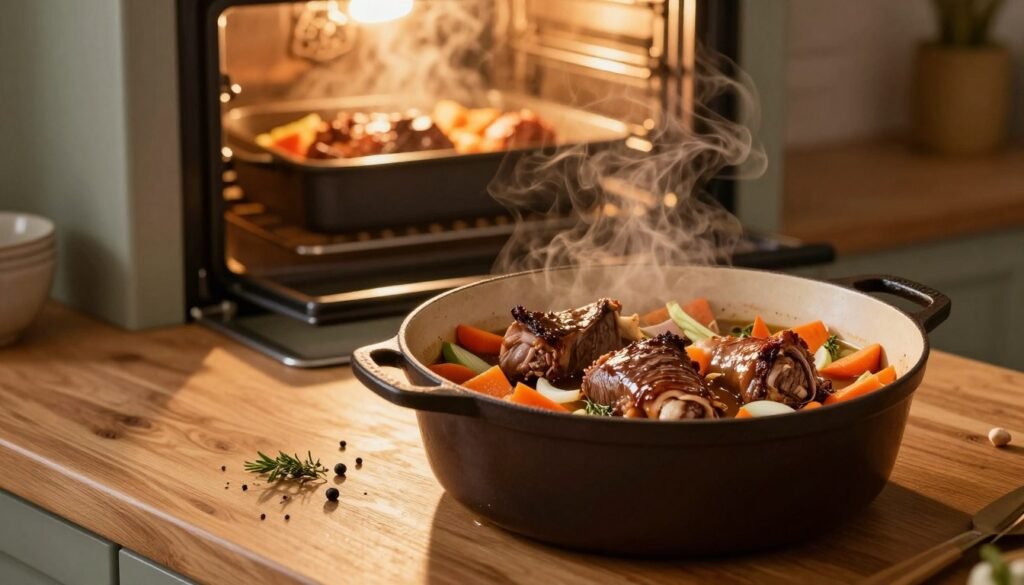
This method cooks the beef shanks in a covered vessel in the oven. The low heat and moist environment break down the meat’s connective tissues. To begin, preheat your oven to the right temperature.
Optimal Oven Temperature
Preheat your oven to 325°F (165°C). This temperature is ideal for slow braising. It turns beef shank with bone into tender perfection. The low heat helps the meat absorb all the flavors from the aromatics and cooking liquid.
Choosing the Right Covered Vessel
Choosing the right vessel is key for oven-braising. Use a heavy Dutch oven or a large, oven-safe pot with a lid. The vessel should fit the beef shanks and cooking liquid, with room for the liquid to simmer. Make sure it’s covered to keep the moisture and heat in.
Total Cooking Time and Checking Progress
Oven-braising beef shanks takes 2.5 to 3 hours. It’s important to check the meat for tenderness. Use a fork or knife to test; if it slides in easily, it’s done. If not, cover and cook for another 30 minutes, then check again.
Common Mistakes to Avoid When Cooking Beef Shanks
Cooking beef shanks can be rewarding, making the meat tender and flavorful. But, some common mistakes can ruin the dish. To get tender and tasty beef shanks, avoid these pitfalls.
Rushing the Cooking Process
Rushing the cooking is a big mistake. Beef shanks need slow cooking to become tender. Impatience can make the meat tough and chewy. Give it enough time, usually 2.5 to 3 hours, depending on the method.
Using Insufficient Liquid
Not using enough liquid is another mistake. Liquid keeps the meat moist and boosts flavor. Too little liquid can make the meat dry and tasteless. Use enough liquid to cover the beef shanks and keep it at the right level while cooking.
Skipping the Searing Step
Searing the beef shanks before slow cooking is essential. It creates a tasty crust and improves the dish’s flavor. Skipping this step can make the final dish less flavorful. Take the time to sear the beef shanks well for the best taste.
Not Allowing Meat to Rest
Not letting the meat rest after cooking is a mistake. Resting allows the juices to spread, making the meat tender and flavorful. Resting the meat is a simple trick to enhance the dish. After cooking, let the beef shanks rest for a few minutes before serving.
Conclusion
Cooking beef shanks with bone is easy and makes the meat tender and flavorful. By learning different braising methods, you can get meat that falls off the bone. This is sure to impress anyone.
Osso buco made with beef shank gets even better the next day. It’s great for meal prep or special occasions. By following the tips in this article, you’ll make delicious beef shank dishes.
As you get better at cooking beef shanks, you’ll enjoy trying new recipes. So, take your time to slow cook your beef shanks. You’ll love the tender and flavorful results.
FAQ
How much beef shank should you purchase per person?
You should buy about one pound per person of beef shank. This is because the meat has a lot of bone and connective tissue. These parts get softer during cooking. So, everyone will get a good amount of meat after it’s cooked.
Why are my beef shanks still tough after several hours of cooking?
If the meat is still tough, it hasn’t cooked long enough. Beef shanks have a lot of collagen. This needs slow, low heat to turn into soft gelatin. Keep your Le Creuset Dutch oven at a gentle simmer. Don’t raise the heat, as it can make the meat tougher.
Do you really need to sear the meat before adding it to a slow cooker?
While you can skip it, searing is key for flavor. Use a Lodge Cast Iron skillet to brown the shanks. This starts the Maillard reaction, making a rich, savory crust. This step adds a deep umami flavor that a Crock-Pot can’t match.
What is the best liquid to use for a rich braising sauce?
For the best flavor, mix beef stock like Kitchen Basics with a dry red wine. A Cabernet Sauvignon or Merlot works well. The wine’s acidity tenderizes the meat, while the stock adds depth to the sauce.
Can you achieve tender results quickly using an Instant Pot?
Yes, an Instant Pot or Mealthy MultiPot can save time. High pressure breaks down the connective tissues in about 45 to 60 minutes. This gives you tender meat in less than half the time of traditional oven cooking.
Should you eat the marrow found inside the center of the bone?
Absolutely. The bone marrow is a highlight, especially in Osso Buco. It has an incredibly rich, buttery flavor. You can spread it on bread or mix it into your braising liquid for a thick, luxurious gravy.
What aromatics provide the best flavor profile for beef?
Start with a mirepoix—diced onions, carrots, and celery. Add fresh thyme, rosemary, and bay leaves for earthy notes. Sautéing tomato paste with the vegetables adds color and richness to the sauce.
Why is it necessary to let the meat rest before serving?
Letting the beef shanks rest for 10 to 15 minutes is crucial. It lets the meat relax and reabsorb the juices. If you serve it right away, the juices will spill out, making the meat dry. Waiting ensures every bite is juicy and tender.