
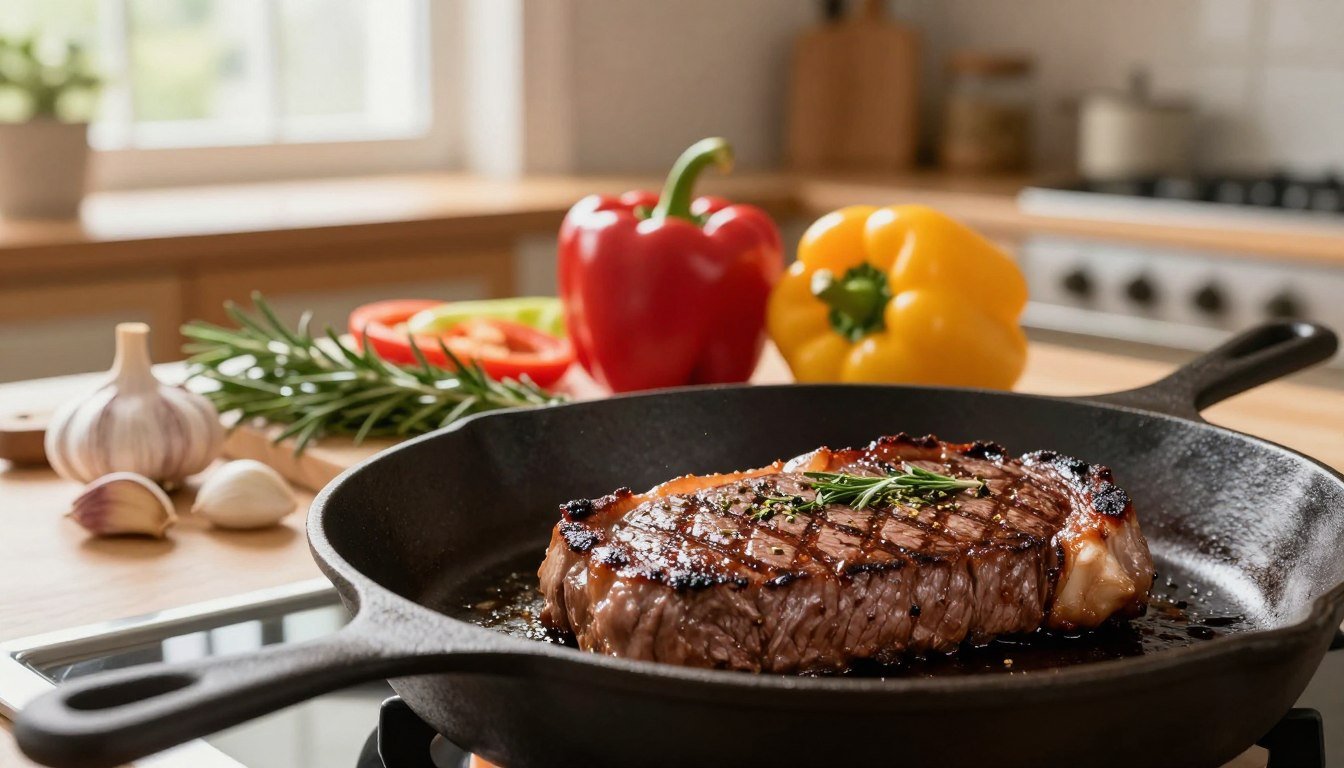
Learn the best methods for cooking flat iron steak at home.
Imagine the excitement as you get ready for dinner. The smell of spices fills the air, and the thought of tender meat is tantalizing. Cooking flat iron steak can make your meals special, whether it’s for family or a quick weeknight dinner.
This cut is known for its rich taste and soft texture cooking flat iron steak . It’s great for anyone who loves to cook, from beginners to experts. You’ll find out how to make your flat iron steak delicious in your own kitchen. Plus, you’ll learn to cook it like a pro.
What is Flat Iron Steak?
Flat iron steak is a cut of beef that’s become very popular. It comes from the chuck primal area of the cow. This area is lower and more muscular than others.
This cut is known for its tenderness and rich marbling. Marbling adds a lot of flavor to the steak.
A Closer Look at the Cut
The flat iron steak is about one to two inches thick. Its thickness makes it great for grilling and pan-searing. It’s named after its flat shape, which sets it apart from other beef cuts.
Flavor Profile and Tenderness
The flat iron steak is tender and has a deep beefy flavor. It’s delicious even without a lot of seasoning. This makes it a great choice for a special meal cooking flat iron steak.
It’s often compared to more expensive cuts like ribeye or tenderloin. This makes it a great value for your money.
Why Choose Flat Iron Steak?
Flat iron steak is becoming more popular for its taste and price. It’s a budget-friendly option that rivals pricier cuts. This makes it perfect for those wanting a tasty meal without breaking the bank.
Cost-Effective Option
The flat iron steak is called the “poor man’s filet.” It offers great taste at a lower cost than ribeye or tenderloin. It’s a great choice for home cooks wanting to impress without spending too much.
Versatility in Cooking Methods
Flat iron steak is great because it can be cooked in many ways. You can grill, roast, or pan-sear it. It’s perfect for both everyday meals and special occasions. Its versatility lets you try new recipes with simple ingredients, making every meal enjoyable.
Preparing Your Flat Iron Steak
Preparing your flat iron steak right can make your cooking better and bring out the steak’s flavors. Start by picking a steak with lots of marbling. This fat makes the meat tender and adds flavor.
Choosing the Right Cut
When picking flat iron steak, look for a bright red color and lots of marbling. A good steak is about an inch thick for the best cooking. Choose cuts labeled USDA Choice or Prime for the best taste.
Drying and Seasoning the Steak
Before seasoning, dry the steak well with paper towels. This step is key for getting that perfect crust. For seasoning, a mix of kosher salt and black pepper is great. For more flavor, try a dry rub with garlic powder or smoked paprika.
Let the steak sit after seasoning. This lets the flavors soak into the meat. Make sure the steak is at room temperature before cooking for even cooking. If marinating, 30 minutes to two hours is enough to add flavor without overpowering the steak’s natural taste.
| Preparation Step | Description |
|---|---|
| Choosing your cut | Look for bright color and marbling |
| Drying | Remove moisture with paper towels |
| Seasoning | Use kosher salt, pepper, and optional spices |
| Resting | Let the steak sit for even cooking |
| Marination | 30 minutes to two hours for flavor enhancement |
Flat Iron Steak Marinade Ideas
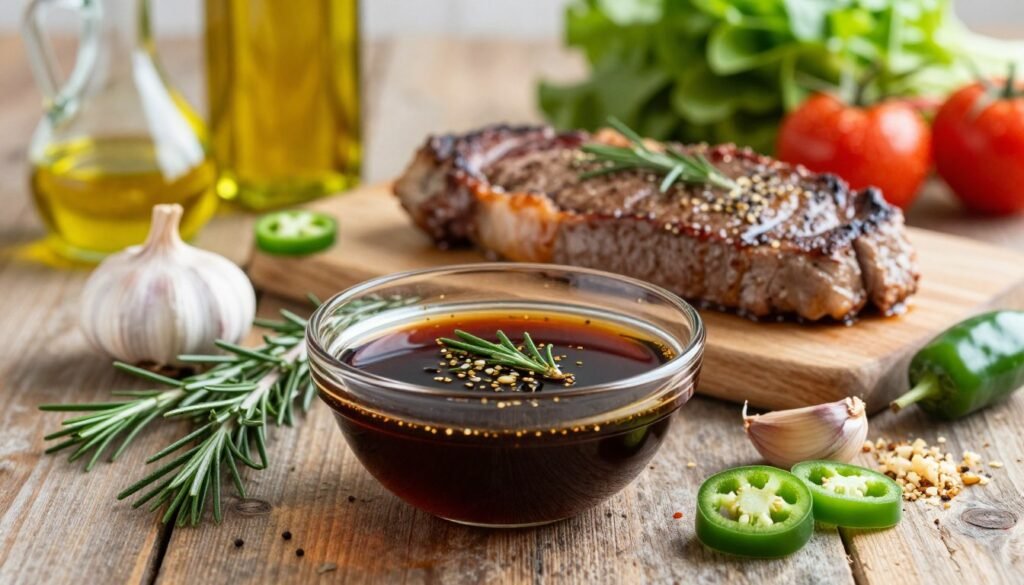
Marinating your flat iron steak can make it taste better. It adds moisture and flavor, making your meal more enjoyable. Here are some easy marinade ideas using common ingredients cooking flat iron steak.
Simple Marinades to Enhance Flavor
Marinades don’t have to be hard to make. Start with olive oil, garlic, and vinegar. Adjust the amounts to your liking. Here are a few marinades you can try:
- Olive oil, balsamic vinegar, minced garlic, salt, and pepper.
- Soy sauce, brown sugar, ginger, and sesame oil for an Asian twist.
- Lemon juice, olive oil, Dijon mustard, and a touch of honey for a zesty flavor.
Using Herbs and Spices
Herbs like rosemary and thyme make steak taste better. They add depth without hiding the beef’s natural flavor. Mix them into your marinade for a great taste. Dry spices like black pepper, paprika, or cayenne can add a kick.
Here’s a table comparing herbs and spices for flat iron steak:
| Herb/Spice | Flavor Profile |
|---|---|
| Rosemary | Earthy, pine-like aroma |
| Thyme | Subtle, slightly sweet flavor |
| Black Pepper | Warm, sharp heat |
| Paprika | Sweet and smoky |
| Cayenne | Fiery heat |
Cooking Flat Iron Steak
Cooking flat iron steak is easy with the right techniques. Many methods use high heat for a beautiful sear. This keeps the meat tender and juicy. Here’s what you need to know about the best methods and timing and temperature guidelines.
Best Cooking Methods
Two popular methods for cooking flat iron steak are:
- Grilling: This method adds a smoky flavor. Preheat your grill for a few minutes to ensure proper searing.
- Pan-Searing: A cast iron skillet works wonders. Preheat the skillet on high heat, adding some oil to prevent sticking.
Time and Temperature Guidelines
To get a perfect medium-rare flat iron steak, aim for an internal temperature of 130–135°F. Here’s a simple guideline for cooking time:
| Cooking Method | Time Per Side | Total Cooking Time |
|---|---|---|
| Grilling | 3-4 minutes | 6-8 minutes |
| Pan-Searing | 3-4 minutes | 6-8 minutes |
Keep a close eye on the steak during cooking. Regularly check its internal temperature. This ensures it reaches your desired doneness without overcooking. Following these tips and time schedules makes cooking perfect flat iron steak at home simple and satisfying cooking flat iron steak.
Searing Flat Iron Steak for Perfect Crust
Searing flat iron steak is key to getting that tasty, flavorful crust. The cast iron technique is perfect for this, as it keeps the heat well and helps with even browning. Before we dive into the details, here are some tips for perfect results.
Using the Cast Iron Skillet Technique
First, preheat your cast iron skillet to a high temperature. This creates a hot, dry surface that’s great for browning. Before adding your steak, brush a light coat of oil on the skillet. This ensures it sizzles right away.
Using the cast iron technique helps you get a beautiful char quickly. This seals in the juices and flavors of your steak.
Avoiding Common Searing Mistakes
When searing flat iron steak, there are a few common mistakes to avoid. One big mistake is overcrowding the skillet. This lowers the temperature and can make your steak steam instead of sear.
Another mistake is flipping the steak too often. Let the crust form on one side before flipping it. It’s also important to let your steak rest after searing. This helps keep the flavors rich by letting the juices spread evenly throughout the meat.
Grilling Flat Iron Steak
Grilling flat iron steak brings together smoky flavors and beautiful grill marks. To get the *best steak char*, you need a good grilling setup. This setup should focus on heat and flavor, ensuring your steak cooks right.
Knowing how to set up your grill makes a big difference. It takes your grilling to the next level, making your steak taste like it’s from a restaurant.
Setting Up the Grill
Begin by making sure your grill is clean and ready. Heat it up to 450°F to 500°F to keep the juices in and add that charred taste. Use a two-zone fire for the best results. This means one side for high heat and another for cooking indirectly.
This setup helps you get a perfect sear without overcooking the steak.
Best Practices for Char and Flavor
To get the most flavor from your steak, follow these tips:
- Lightly oil the grill grates to prevent sticking and make flipping easier.
- Season the steak with salt and pepper right before grilling for the best flavor.
- Grill the steak for 4-5 minutes on each side for a medium-rare finish. Adjust as needed for your taste.
- Adding wood chips can give your steak a smoky flavor and enhance the grilling experience.
By following these practices, you’ll get a great steak char and keep the steak juicy. This makes flat iron steak even more delicious.
Achieving the Perfect Flat Iron Steak Temperature
Getting the right flat iron steak temperature is key to a great meal. Each doneness level has its own taste and texture. Knowing how to check these temperatures makes your steak even better.
Understanding Doneness Levels
When cooking your flat iron steak, it’s vital to know the different doneness levels. Each level has a specific temperature range:
| Doneness Level | Temperature Range (°F) |
|---|---|
| Rare | 120-125 |
| Medium Rare | 130-135 |
| Medium | 140-145 |
| Medium Well | 150-155 |
| Well Done | 160+ |
Using a Meat Thermometer Effectively
To get your steak just right, a meat thermometer is a must. Stick it into the thickest part of the steak, away from bones. This way, you get precise readings and know when to take it off the heat.
Remember, the steak’s temperature might go up a bit after you take it off the heat. This is called carryover cooking. Knowing this helps you avoid overcooking and ensures your steak is perfect.
Resting and Slicing Techniques
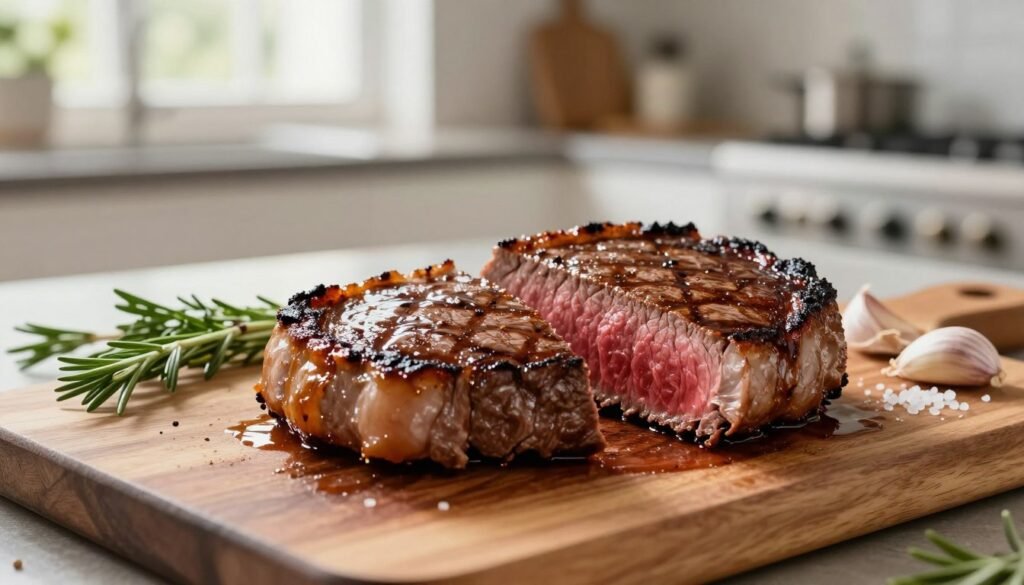
Preparing your flat iron steak right is key to its taste and texture. Resting the steak after cooking is a must. It lets the juices spread evenly, making each bite tender and flavorful. Let your steak rest for five to ten minutes to keep it moist during slicing.
Importance of Resting the Steak
If you don’t let the steak rest, it can end up dry. This is because juices escape when cut too soon. By waiting, you get a juicy, balanced steak. This patience makes every slice better.
Cutting Against the Grain for Tender Slices
After resting, it’s time to slice the steak. Cutting against the grain makes it tender. Look for the muscle fibers to know the grain’s direction. Slicing against these fibers gives you tender, juicy pieces. Try for thin slices for the best taste and texture.
Conclusion
Our cooking flat iron steak summary shows this cut can make any meal better. By trying different ways to cook it, you can make a perfect steak at home. This will please your taste buds and impress your guests.
When cooking flat iron steak, paying attention to details is key. Resting the meat and cutting it right can make it tender and juicy. With the tips we’ve shared, you’re ready to impress everyone with your cooking.
Now, it’s time to put these techniques to use in your kitchen. Cooking flat iron steak at home can turn simple dinners into special moments. Enjoy the process and the delicious results!
FAQ
What is flat iron steak?
Flat iron steak, also known as top blade steak, comes from the chuck primal region of the cow. It’s tender and has a lot of marbling. This gives it a beefy flavor that’s great for home cooks easy flat iron steak recipe.
How can I ensure my flat iron steak is tender?
Choose a well-marbled cut and dry the steak before seasoning. Proper cooking techniques are key. This includes the right time, temperature, and letting the steak rest after cooking easy flat iron steak recipe.
What is the best flat iron steak recipe for beginners?
For a simple recipe, marinate the steak in olive oil, garlic, and herbs like rosemary and thyme. Then, grill or pan-sear it until it’s medium-rare. The internal temperature should be 130–135°F easy flat iron steak recipe.
What is the ideal flat iron steak marinade?
A good marinade has olive oil, minced garlic, and herbs like rosemary and thyme. It enhances the steak’s natural flavors. Marinate for at least 30 minutes for the best taste.
How do I grill flat iron steak properly?
Preheat your grill to high heat and grease the grates to prevent sticking. Cook the steak for 3-4 minutes per side for medium-rare. Always check the internal temperature for accuracy.
What are the best seasonings for flat iron steak?
Use kosher salt, black pepper, and optional finishing salts for seasoning. Keep it simple. The steak’s natural flavors are best when not over-seasoned.
How do I know when my flat iron steak is cooked to the right temperature?
Use a meat thermometer to check the temperature. For medium-rare, aim for 130–135°F. Remember, the temperature may rise a bit after removing from heat.
Why is resting flat iron steak important?
Resting the steak allows the juices to spread evenly. This makes each bite tender and juicy. Let it rest for five to ten minutes before slicing.
What common mistakes should I avoid when searing flat iron steak?
Don’t overcrowd the pan, as it lowers the temperature. Also, avoid moving the steak too much. These mistakes can ruin the sear and cooking cooking flat iron steak.
Can flat iron steak be cooked in a cast iron skillet?
Yes! Cooking flat iron steak in a cast iron skillet is great for a crusty exterior. Preheat the skillet well before adding the steak for the best results cooking flat iron steak.