
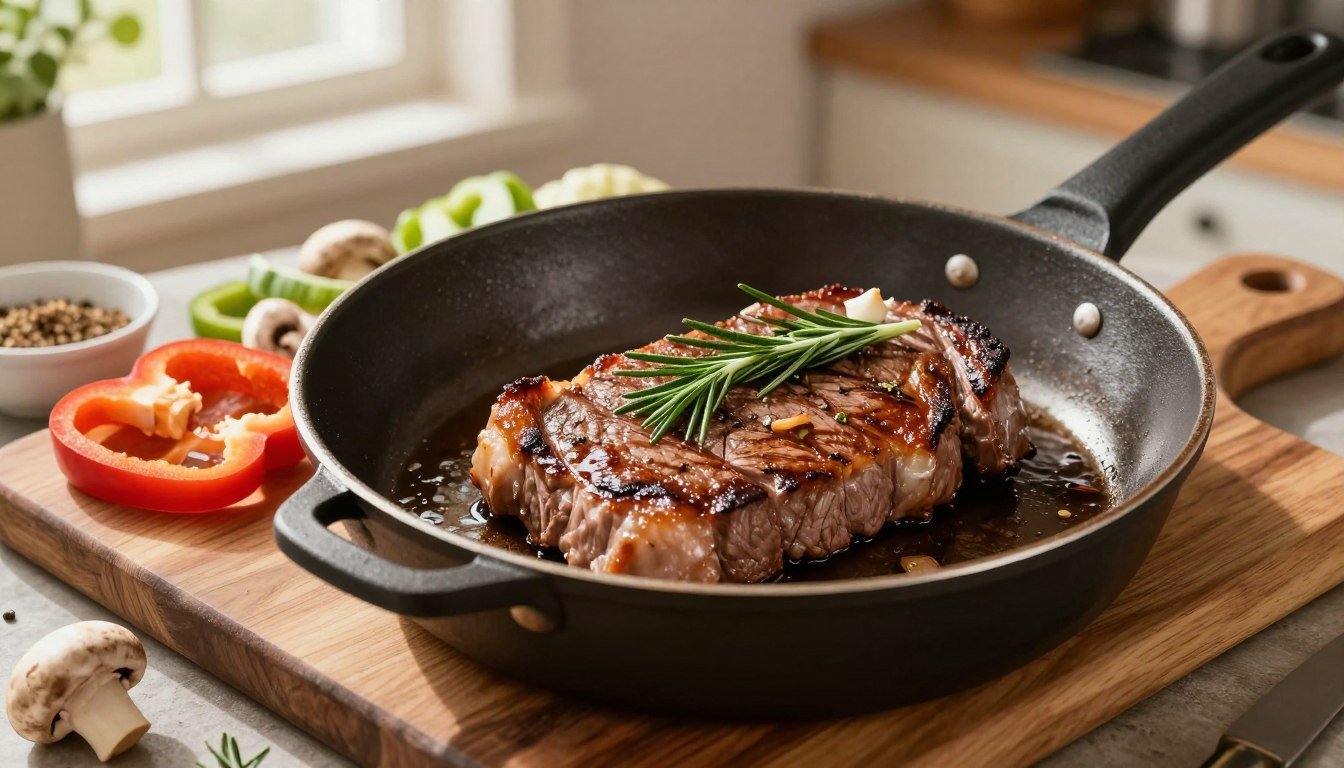
Steak Recipes Pan | Easy Skillet Steak Ideas
Do you remember the mouthwatering aroma of a perfectly seared dinner filling your kitchen? It’s deeply satisfying to make a restaurant-quality meal at home. You don’t need professional training to get that golden, flavorful crust and a tender, juicy center.
Mastering a reliable skillet steak recipe can make your weeknight dinners special. Using a high-quality steak recipes pan opens up a world of culinary possibilities. This method keeps natural juices in and ensures a perfect finish every time.
These easy steak recipes make cooking for family or guests stress-free. Whether you’re new to cooking or experienced, simple techniques lead to impressive results. Try these homemade steak recipes to make your next dinner unforgettable and something to be proud of.
Mastering the Art of the Perfect Pan-Seared Steak
Learning to make the perfect pan-seared steak starts with knowing how heat works with protein. When you put beef under intense heat, the Maillard reaction happens. This process makes a savory crust on the steak.
Chefs love this method because it keeps the steak juicy and adds a caramelized outside. By controlling the heat, you make sure the inside stays tender. The outside gets a great, steakhouse-quality look. Precision is your greatest tool in this culinary endeavor.
“The secret to a great steak is not just the quality of the meat, but the intensity of the heat applied to the surface.”
To understand the effects of different cooking methods, let’s look at some common techniques. Each has its own benefits for your kitchen.
| Method | Heat Level | Crust Quality | Cooking Time |
|---|---|---|---|
| Pan-Sear | High | Excellent | Fast |
| Reverse Sear | Low to High | Good | Slow |
| Grilling | Medium-High | Moderate | Medium |
When you make a quick pan-seared steak, you create a flavorful crust. This crust keeps the inside moist. Learning this skill will make your steak dishes always delicious.
Understanding heat management can change your cooking. Whether you’re new or experienced, the quick pan-seared steak is key for flavor and speed. Follow these basic principles to improve your beef dishes.
Essential Equipment for Your Steak Recipes Pan Collection
Starting your journey to a perfect quick pan-seared steak means picking the right skillet. It’s not just about the meat; the pan you use is key. You need a heavy-bottomed pan that can handle high heat without warping or losing temperature when the cold beef hits it.
Choosing the right equipment is crucial for making the best steak recipes every time. A pan with great thermal mass helps your steak get a deep, flavorful crust. This simple change turns your kitchen into a steakhouse.
Choosing the Right Skillet Material
When looking for a new pan, you’ll find many options. Each has its own benefits. Knowing how these materials handle heat helps you pick the best for your quick pan-seared steak.
- Stainless Steel: It’s durable and non-reactive, great for pan sauces.
- Carbon Steel: Heats up fast and is lighter, making it easy to cook with.
- Cast Iron: Keeps heat well and creates a dark, tasty crust.
Why Cast Iron Remains the Gold Standard
Many chefs say cast iron is the top choice for best steak recipes. It holds heat incredibly well, which is key for searing meat. A well-seasoned cast iron skillet also has a natural non-stick surface that gets better with time.
These pans are almost indestructible and can last for decades. They’re a smart investment that makes every meal better. With the right pan, your steak will have a beautiful, caramelized outside and a juicy inside.
Selecting the Best Cuts of Beef for Skillet Cooking
Choosing the right cut of beef is key to making the best steak recipes in your kitchen. Skillet cooking needs direct, high heat to create a flavorful crust. It’s important to pick a cut that can handle this heat and stay tender.
Understanding Ribeye and New York Strip Characteristics
The ribeye and New York strip are top choices for skillet cooking. A ribeye is loved for its rich flavor, thanks to its fat. This fat melts during cooking, making the meat juicy.
The New York strip has a firmer texture and a stronger beef taste. It has a fat strip that crisps up beautifully. Both cuts are great for making the best steak recipes at home.
Tips for Selecting High-Quality Marbling
Marbling is the white fat in beef muscle tissue. Look for a fine, web-like pattern of fat, not big chunks. This fat keeps the steak juicy and tender.
Good marbling melts and tenderizes the meat. Without it, the steak might dry out under high heat. Always choose meat with good marbling for the best results.
| Cut Type | Fat Content | Texture | Best Cooking Method |
|---|---|---|---|
| Ribeye | High | Very Tender | Pan-Sear/Baste |
| New York Strip | Medium | Firm/Chewy | Pan-Sear/Grill |
| Filet Mignon | Low | Buttery Soft | Pan-Sear/Butter Finish |
Preparing Your Steak for the Perfect Sear
Getting a great sear on your steak begins before it hits the skillet. The steps you take before cooking are key to the steak’s texture and taste. By following a few simple steps, your beef will be ready for high heat.
The Importance of Room Temperature Resting
One big mistake is putting a cold steak in a hot pan. This can burn the outside before the inside is cooked right. Letting your steak rest at room temperature for 30 to 45 minutes helps it cook evenly.
This break relaxes the meat’s muscle fibers, making it tender. The heat will cook the meat more evenly, avoiding overcooked edges. This small step makes a big difference in your meal.
Patting Dry for a Superior Crust
Moisture ruins a beautiful crust. If your steak is wet, the heat will evaporate the water instead of searing it. This leads to a gray, boiled look instead of a delicious, caramelized sear.
To prevent this, dry the steak with paper towels until it’s dry all over. Don’t forget the sides, as moisture can hide in the fat cap. By removing excess liquid, the steak will sear well, creating a deep, flavorful crust.
Seasoning Techniques for Flavorful Steak Dishes
Proper seasoning is key for delicious steak recipes at home. Many focus only on pan heat, but how you season the meat is crucial. The right ingredients at the right time can make your steak taste like a pro’s.
The Science of Salt Application
Salt does more than add flavor; it changes the meat’s texture. Salt applied early pulls moisture to the surface, creating a brine. This brine tenderizes the meat from inside.
For a great crust, dry the steak after salting. A dry surface helps the Maillard reaction, creating a deep sear. Waiting too long to salt means missing this step.
Using Fresh Herbs and Aromatics
To make flavorful steak dishes, go beyond salt and pepper. Adding fresh herbs like garlic, rosemary, and thyme during cooking adds depth. These aromatics infuse the meat with complex flavors.
Add these herbs to the skillet when the steak is almost done. The heat from the pan releases the herbs’ oils without burning them. This simple step makes your dish gourmet.
| Seasoning Type | Best Timing | Primary Benefit |
|---|---|---|
| Kosher Salt | 45 minutes before | Deep penetration and tenderization |
| Black Pepper | After searing | Prevents bitter burnt flavors |
| Fresh Garlic | Last 2 minutes | Adds aromatic depth to the crust |
| Fresh Thyme | During basting | Provides earthy, herbal notes |
Achieving the Ideal Sear with High-Heat Cooking
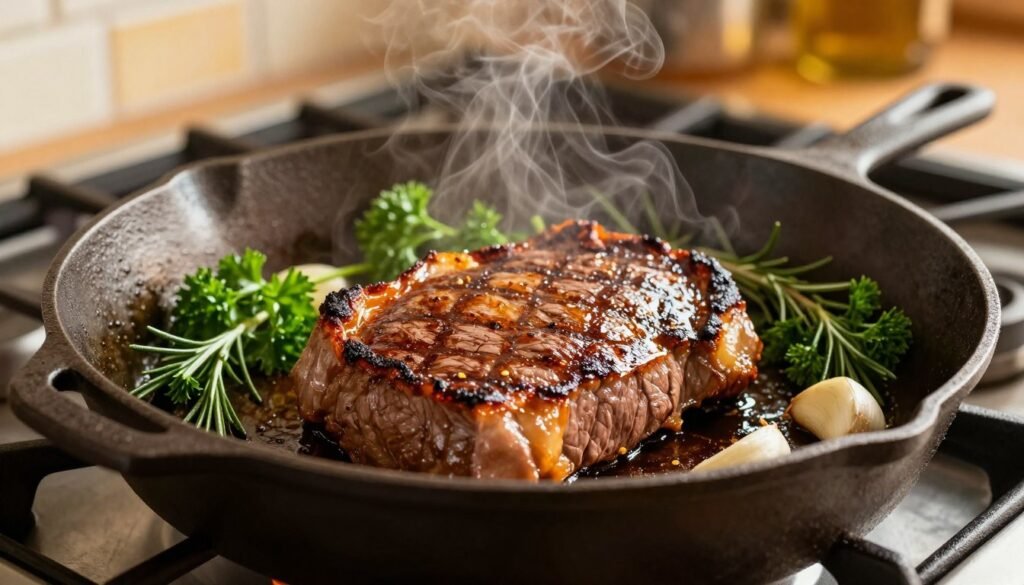
High-heat cooking is key to making a top-notch steak at home. It uses intense heat to create a savory crust. This is the heart of a great skillet steak recipe.
“The secret to a great steak is not just the quality of the meat, but the confidence to let the pan do the work at high temperatures.”
Managing Smoke Points and Oil Selection
Choosing the right fat is crucial. Each oil has a smoke point. Using an oil with a low smoke point can make your steak taste bitter.
For a sizzling pan steak recipe, pick oils like avocado, grapeseed, or refined coconut oil. They can handle high heat.
Don’t use butter or extra virgin olive oil at first. They burn too fast. Add butter later to enrich the flavor without burning.
Techniques for Even Heat Distribution
Even heat is key for a well-cooked steak. Preheat your skillet over medium-high heat for a few minutes. This ensures the pan is hot all over.
For big cuts, turn the meat if one side browns faster. Keep the heat steady for a perfect skillet steak recipe. This way, every sizzling pan steak recipe turns out great.
The Butter Basting Method for Restaurant-Quality Results
Making flavorful steak dishes at home is simpler than you might think. The right basting method adds a rich layer that makes your steak taste like it’s from a fancy steakhouse. By adding fat at the end, you keep the crust crispy and the inside juicy.
Adding Garlic and Thyme for Depth
When your steak has a nice, golden crust, it’s time to add aromatics. Lower the heat and add a big piece of unsalted butter to the skillet. Throw in some smashed garlic and fresh thyme to make the butter aromatic.
The butter will start to foam as the garlic and herbs release their oils. This makes a savory sauce that coats the steak, adding deep, earthy flavors. It’s like bathing the steak in a seasoned sauce that makes every bite better.
How to Properly Spoon Baste
To baste perfectly, tilt your skillet so the butter pools at the bottom. Use a big metal spoon to scoop the hot, herb-infused butter over the steak. This keeps the heat even and the steak absorbs the garlic and thyme.
Keep doing this for about one to two minutes until the steak is just right. This method is the secret to making flavorful steak dishes that look and taste like they’re from a pro kitchen. The result is a steak with a glossy, rich finish that makes your beef taste even better.
| Aromatic | Flavor Profile | Best Use |
|---|---|---|
| Garlic | Pungent and Savory | Classic Steakhouse Style |
| Fresh Thyme | Earthy and Floral | Balancing Rich Fats |
| Rosemary | Piney and Bold | Stronger Beef Cuts |
Determining Doneness Without Guesswork
Stop guessing if your steak is ready with these simple techniques. Getting the perfect doneness is key to being a great home cook. By using objective data, you ensure your meals are cooked just right.
Using an Instant-Read Thermometer
An instant-read thermometer is your most reliable tool. It gives you an exact internal temperature reading of your beef. Insert the probe into the thickest part of the steak, avoiding bones or fat.
Remember, the temperature will rise a bit after you take the meat off the heat. Aim to remove the steak about five degrees before your target temperature. Here’s a guide to help you achieve your desired doneness:
| Doneness Level | Internal Temperature | Description |
|---|---|---|
| Rare | 120°F – 125°F | Cool red center |
| Medium-Rare | 130°F – 135°F | Warm red center |
| Medium | 140°F – 145°F | Warm pink center |
| Well-Done | 160°F+ | Little to no pink |
The Touch Test Method Explained
Without a thermometer, use the touch test to check your steak’s doneness. This method compares the meat’s firmness to your hand’s fleshy part near your thumb. It’s less precise than a digital tool but useful for quick checks.
- Rare: Touch your thumb to your index finger; the muscle at the base of your thumb feels soft and squishy.
- Medium-Rare: Touch your thumb to your middle finger; the muscle feels slightly firmer with a bit of resistance.
- Medium: Touch your thumb to your ring finger; the muscle feels firm and springy.
- Well-Done: Touch your thumb to your pinky finger; the muscle feels very firm and tight.
Practice this technique by pressing on the steak with your tongs or a clean finger. Over time, you’ll learn to recognize the specific resistance of perfectly cooked beef. Combining this with your visual observations will make you more confident in your cooking.
Resting Your Steak for Maximum Juiciness
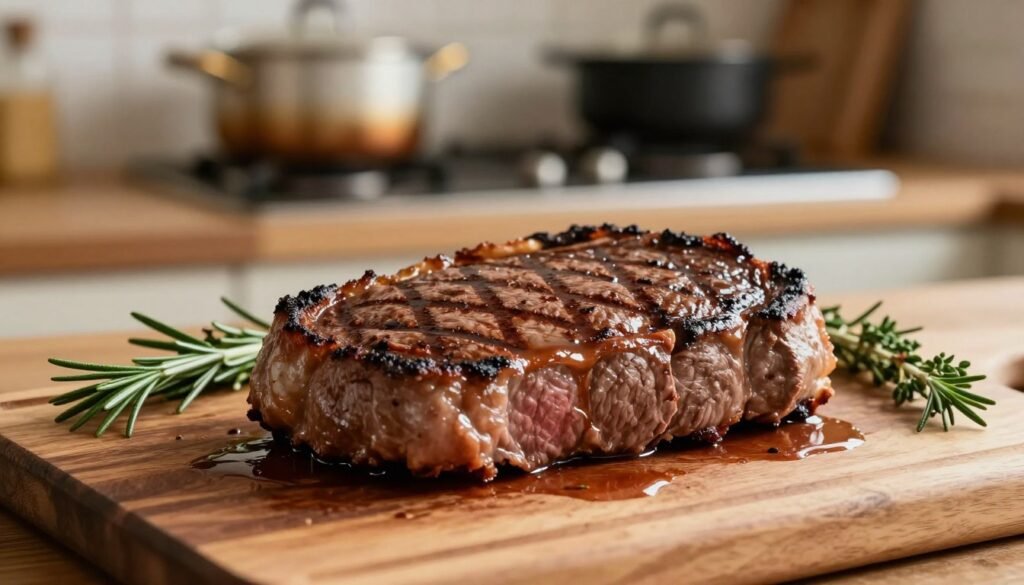
The secret to a juicy steak is in the resting time after cooking. Cutting into a steak too soon can ruin its texture. Patience is the final ingredient for a perfect meal.
Why Resting Prevents Moisture Loss
High heat tightens the muscle fibers in beef. This pushes juices to the center of the steak. If you cut it right away, these juices spill out.
Letting the steak rest allows the fibers to relax and reabsorb juices. This redistribution process keeps every bite moist and tender. Waiting a few minutes helps preserve the steak’s quality.
The Ideal Resting Time for Different Cuts
The resting time depends on the steak’s thickness and cut. Thicker cuts need more time to cool down. Here’s a guide for resting times.
| Cut Type | Thickness | Recommended Rest Time |
|---|---|---|
| Thin Skirt or Flank | Under 1 inch | 3 to 5 minutes |
| Standard Ribeye/Strip | 1 to 1.5 inches | 5 to 8 minutes |
| Thick-Cut Porterhouse | Over 1.5 inches | 10 to 15 minutes |
Place your steak on a warm plate or cutting board. Cover it loosely with foil. This keeps it warm and allows steam to escape. Proper resting makes a big difference in a steak’s quality.
Creative Variations for Easy Steak Recipes
Mastering the basics of searing opens up a world of creative possibilities. You don’t need to be a pro to elevate a simple steak into a gourmet dish. Adding bold sauces and fresh herbs can turn your homemade steak recipes into a restaurant-quality meal at home.
These simple tweaks make easy steak recipes both versatile and satisfying. Whether you like a creamy sauce or a zesty herb kick, there’s something for everyone. These delicious steak recipes are great for quick weeknight dinners that impress.
Pan-Seared Steak with Peppercorn Sauce
A peppercorn sauce adds a sophisticated, spicy touch that complements a ribeye or strip steak. To make it, deglaze your skillet with heavy cream and crushed peppercorns after removing the meat. This homemade steak recipes twist creates a smooth, velvety sauce that coats the beef beautifully.
Quick Skillet Steak with Chimichurri
For a lighter, fresher flavor, try chimichurri. It’s a mix of parsley, garlic, vinegar, and olive oil that cuts through the steak’s richness. This delicious steak recipe is quick to make and offers a refreshing contrast to the steak’s char.
| Topping Type | Flavor Profile | Best Paired With |
|---|---|---|
| Peppercorn Sauce | Creamy and Bold | Ribeye |
| Chimichurri | Bright and Herby | New York Strip |
| Garlic Herb Butter | Savory and Rich | Filet Mignon |
Trying out these toppings can help you improve your steak recipes pan skills. These easy steak recipes are flexible, so you can adjust the flavors to your liking.
Common Mistakes to Avoid When Cooking Steak in a Pan
Mastering the art of cooking steak in a pan means avoiding common mistakes. Even with top-quality beef, small errors can spoil your dish. Knowing these pitfalls helps ensure your meals are always a hit.
Preventing Overcrowding the Skillet
One big mistake is putting too much meat in the pan at once. This lowers the pan’s temperature and traps moisture. Instead of a nice sear, your steak will steam in its juices.
Make sure to leave at least an inch of space between each steak. If you’re cooking for many, cook in batches. This simple trick helps achieve that perfect crust every time.
Avoiding the Pitfalls of Cold Meat
Cooking steak straight from the fridge leads to uneven cooking. The cold center prevents the outside from searing properly. Always let your steak sit at room temperature for at least thirty minutes before cooking.
This step relaxes the meat’s fibers, ensuring even cooking. Controlling your ingredients’ temperature is key to achieving the right texture. Use the table below to improve your cooking skills.
| Common Mistake | Resulting Issue | Recommended Fix |
|---|---|---|
| Overcrowding | Steamed, gray meat | Cook in smaller batches |
| Cold meat | Uneven internal temp | Rest at room temp |
| Low heat | Lack of crust | Preheat the pan fully |
| Excess moisture | Soggy exterior | Pat dry with paper towels |
Conclusion
Learning to pan-sear turns simple foods into gourmet dishes at home. You now know how to pick the best beef and control the heat for great results.
Improving your cooking takes time and effort. Each time you use your Lodge cast iron skillet, you get better at making a perfect crust and a juicy center.
Try different cuts like ribeye or New York strip to find your favorite. Experiment with herbs and butter basting to keep your meals interesting.
Share your delicious dishes with loved ones to make every meal special. Your hard work in mastering these basics will make every steak a memorable experience.
FAQ
Why is pan-searing considered one of the best steak recipes for achieving restaurant quality at home?
Pan-searing works well because it uses high heat. This heat creates a flavorful crust through a chemical process. By learning how to pan-sear, you can keep the steak juicy and cook it just right. This makes your steak taste amazing every time.
What type of pan should I use for a successful skillet steak recipe?
For great skillet steak, use a heavy pan that keeps heat well. A Lodge Cast Iron skillet is top choice for chefs like Gordon Ramsay. It keeps a steady temperature, making sure your steak gets a perfect crust.
How do I choose the right cut of beef for homemade steak recipes?
Choose beef with lots of fat, called marbling. A Ribeye or New York Strip works well in the pan. The fat melts, making the meat tender and juicy.
Why must I pat the meat dry before starting a sizzling pan steak recipe?
Wet meat steams instead of sears. Use a paper towel to dry the steak before cooking. This helps the meat brown quickly, making it taste like high-end steakhouse food.
When is the best time to season the meat for easy steak recipes?
Salt your steak 40 minutes before cooking or right before. Early salting improves flavor. Salting just before cooking keeps the surface dry for a great crust.
What oil is recommended for achieving flavorful steak dishes without smoke?
Use oil with a high smoke point like avocado or grapeseed oil. These oils handle high heat without smoking. This keeps your steak rich and flavorful.
How does butter basting elevate a standard skillet steak recipe?
Butter basting adds a luxurious touch. Use high-quality butter, garlic, and thyme in the pan’s last minutes. This creates a rich, aromatic finish to your steak.
How can I accurately tell when my steak is done?
Use an instant-read thermometer, like a Thermoworks Thermapen, for the best results. For medium-rare, aim for 130°F to 135°F. Remember, the temperature will rise a bit while it rests.
Why is resting the meat essential for all steak recipes pan methods?
Resting lets the meat’s juices redistribute. Cutting into it too soon spills these juices. Resting for 5 to 10 minutes makes every bite juicy and flavorful.
What are some quick ways to vary my easy steak recipes for weeknight meals?
Try different toppings to spice up your steak. Add a fresh chimichurri sauce or a green peppercorn reduction. These simple changes make your steak recipes exciting and gourmet.