
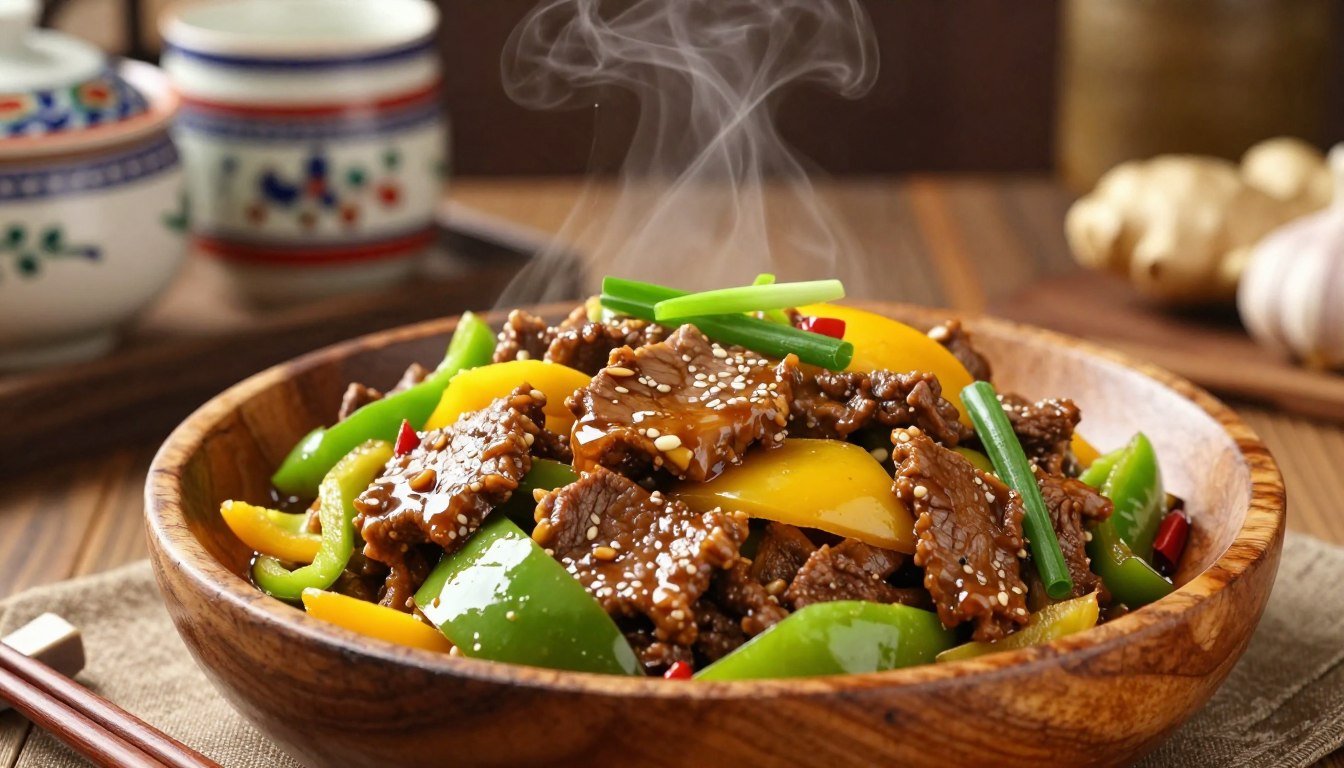
Authentic Mongolian Beef Recipe | Easy Homemade Stir Fry
Ever craved the bold, savory flavors of your favorite takeout after a long day? Making a restaurant-quality meal at home is magical. You deserve a special dinner without spending hours cooking.
Learning this easy mongolian beef recipe can save your weeknights. It lets you satisfy your cravings with a simple, yet delicious dish. This authentic mongolian beef recipe teaches you how to get that perfect texture and glaze. Making homemade mongolian beef is easy once you know the stir fry basics.
This mongolian beef guide is perfect for any cook. It’s a great way to impress your family with a dish that’s better than takeout. Let’s cook your new favorite meal tonight.
Understanding the Origins of Mongolian Beef
The name Mongolian Beef might make you think of the vast steppes of Central Asia. But, its roots are actually in mid-20th century Taiwan. This dish is not a traditional Mongolian beef recipe from Mongolia. Instead, it came from the creative world of Taiwanese barbecue restaurants.
The Cultural Context of Stir-Fry Dishes
Stir-frying is a key part of Chinese cooking. It uses high heat and quick movements. This keeps the ingredients’ texture and color, adding deep, smoky flavors.
Stir-fry dishes have traveled across borders, changing to fit local tastes and ingredients. They show how chefs mix old methods with new flavors for different tastes. This is how Mongolian Beef became a favorite worldwide.
Distinguishing Authentic Mongolian Beef from Americanized Versions
Looking for an authentic Mongolian beef recipe shows big differences from Western versions. The authentic Chinese Mongolian beef has a lighter sauce and focuses on the meat’s quality. American versions often have a thicker, sweeter glaze and deep-fried beef.
Knowing these differences helps you enjoy your meal more. Whether you like the classic taste or the sweeter version, understanding its history lets you cook it your way. Here’s a table showing the main differences between these styles.
| Feature | Authentic Style | Americanized Style |
|---|---|---|
| Beef Texture | Tenderized/Velveted | Crispy/Deep-fried |
| Sauce Profile | Savory and Light | Sweet and Thick |
| Primary Aromatics | Scallions and Ginger | Garlic and Soy Sauce |
| Serving Base | Steamed Rice | Fried Rice or Noodles |
Essential Ingredients for Your Authentic Mongolian Beef Recipe
To make the best Mongolian beef recipe, choose fresh, high-quality ingredients. Quality ingredients mean every bite tastes amazing, like a pro kitchen. Get these specific parts to start your cooking journey right.
Selecting the Best Cuts of Beef
The heart of a great stir-fry is the meat. For an authentic Mongolian beef recipe, pick cuts that stay tender when cooked fast.
Flank steak is the top pick because it soaks up marinades well. Sirloin is also good if you want it leaner. Always slice your beef against the grain for a soft, chewy texture.
The Role of Aromatics and Spices
Aromatics give the dish its unique smell. Fresh ginger and garlic are must-haves for a bold, savory taste.
Mince these finely so they mix well in the sauce. When they hit hot oil, they release oils that boost your best Mongolian beef recipe‘s flavor.
Choosing the Right Soy Sauce and Sweeteners
The mix of salty and sweet is key. Good soy sauce adds umami, while brown sugar brings a sweet, molasses taste.
Feel free to tweak the soy sauce and brown sugar mix to your liking. A balanced sauce glazes the beef, making your authentic Mongolian beef recipe taste like a restaurant dish.
Preparing Your Kitchen for a Successful Stir Fry
Getting great results at home starts before you cook. When you follow an easy mongolian beef recipe, preparation is key. Organizing your kitchen helps keep things smooth and stress-free.
The Importance of Mise en Place
Mise en place means “everything in its place” in French. It’s crucial for stir-fries. Since cooking is fast, you can’t chop or measure ingredients once the pan is hot.
Before cooking, chop, slice, and measure all ingredients. This way, you can focus on technique. This habit is key to a professional kitchen and makes cooking more fun.
Choosing the Right Wok or Skillet
The right pot changes your dish’s texture. A carbon steel wok is best because it heats fast and tosses ingredients well. If you don’t have a wok, a heavy-bottomed skillet works great too.
| Cookware Type | Heat Retention | Best Use |
|---|---|---|
| Carbon Steel Wok | High | Authentic Stir-Frying |
| Cast Iron Skillet | Very High | Searing Meat |
| Stainless Steel Pan | Moderate | General Cooking |
Managing Heat Control for Perfect Searing
Controlling heat is key. You want to sear the beef to keep juices in and get a tasty crust. Make sure your pan is very hot before adding the meat.
Don’t overcrowd the pan. This lowers the heat and makes the meat soggy. Cooking in small batches keeps the heat high for a crispy texture. These steps will make your easy mongolian beef recipe stand out.
Mastering the Technique of Velveted Beef
Ever wondered why your stir-fry meat isn’t as silky as restaurant dishes? The secret is velveting. This essential culinary technique turns tough beef into tender, melt-in-your-mouth bites. It protects the meat from drying out under high heat.
Why Velveting is Crucial for Tenderness
Velveting creates a protective layer around the meat. By coating the beef in cornstarch and baking soda, you change its surface. This prevents the muscle fibers from tightening too fast when cooked.
Without velveting, beef can become chewy or rubbery quickly. This technique keeps the meat juicy inside and the outside lightly coated. It’s why your home-cooked meals can match your favorite restaurant’s quality.
Step-by-Step Guide to the Velveting Process
Start by slicing the beef thinly against the grain. Mix it with cornstarch, baking soda, soy sauce, and oil in a bowl. Use your hands to massage the ingredients into the meat.
Let the mixture rest for at least twenty minutes. This step is vital for the ingredients to soak into the meat. After resting, your beef is ready to be seared in a hot pan.
Common Mistakes to Avoid When Preparing Meat
One common mistake is overcrowding the pan. Too much meat lowers the wok’s temperature, causing it to steam instead of sear. Cook in small batches to keep the heat high.
Another error is skipping the resting phase or using too much baking soda. This can give the meat a metallic taste. Stick to the recipe to avoid this and ensure a balanced flavor.
| Feature | Untreated Beef | Velveted Beef |
|---|---|---|
| Texture | Chewy and tough | Silky and tender |
| Moisture | Dries out quickly | Retains natural juices |
| Sauce Adhesion | Slides off the surface | Clings to the coating |
| Cooking Speed | Requires careful timing | Forgiving under high heat |
Crafting the Perfect Mongolian Beef Sauce
The secret to a memorable mongolian beef is in its sauce. This sauce adds moisture and flavor. By mastering these elements, you can make it just like the pros.
Balancing Salty, Sweet, and Savory Profiles
A great sauce needs salty soy sauce and sweet caramelized notes. Aim for a mix that brings out soy’s umami and softens it with brown sugar. This balance keeps the dish interesting.
“A balanced sauce is the soul of any stir-fry; it must coat the ingredients without overwhelming their natural textures.”
Begin with quality soy sauce and dark brown sugar. Add ginger and garlic for a savory layer. This enhances your mongolian beef‘s flavor.
The Science of Thickening Your Sauce
To get a glossy sauce, use gelatinization. Mix cornstarch with cold water, then add it to hot sauce. This makes the sauce thick and velvety.
Whisk cornstarch with cold water before adding it. Dry starch can clump and ruin your sauce. When the sauce bubbles, it thickens fast.
Adjusting Flavors for Personal Preference
Make your sauce your own by adjusting flavors. Add rice vinegar or sesame oil for a bolder taste. The table below shows common tweaks for your mongolian beef sauce.
| Desired Outcome | Ingredient Addition | Effect on Sauce |
|---|---|---|
| More Sweetness | Extra Brown Sugar | Balances saltiness |
| Higher Umami | Dash of Oyster Sauce | Adds savory depth |
| Thicker Glaze | More Cornstarch Slurry | Better coating ability |
| Brighter Flavor | Rice Vinegar | Cuts through richness |
Taste your sauce before adding it to the meat. Adjusting the seasoning here ensures every bite is perfect.
Step-by-Step Cooking Process for Mongolian Beef
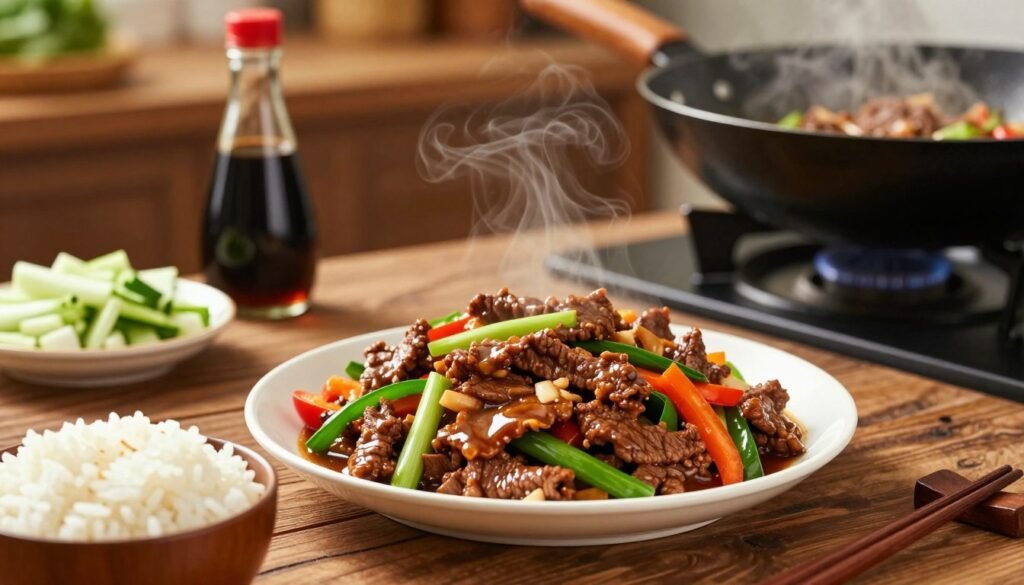
The secret to a perfect mongolian beef stir fry recipe is in managing heat and timing. You need to have everything ready before starting. Precision is key when stir-frying at high temperatures.
Searing the Beef to Perfection
First, heat your wok or skillet until it’s very hot. Add a bit of oil and place the beef in the pan. It’s important to cook the meat in small batches to avoid overcrowding.
Adding too much meat at once lowers the temperature. This makes the beef steam instead of sear. You want a caramelized crust on the outside and tender inside. Once browned, remove the beef and set it aside.
Sautéing Aromatics and Vegetables
After removing the beef, clean the pan if needed. Add oil and toss in ginger and garlic. These aromatics release fragrance quickly, so keep them moving to prevent burning.
Add vegetables like broccoli or snap peas next. Sauté them until they are bright and crisp-tender. This keeps them crunchy, contrasting with the savory meat.
Combining Ingredients for the Final Glaze
Return the beef to the pan and pour in the sauce. The sauce will bubble as it hits the hot surface. This is when your mongolian beef stir fry recipe comes together.
Toss everything together for about a minute. The sauce will thicken into a glossy glaze. Serve immediately while hot for the best texture. This careful sequence makes your meal professional and delicious.
| Cooking Stage | Heat Level | Goal |
|---|---|---|
| Searing Beef | High | Caramelization |
| Aromatics | Medium-High | Fragrance |
| Glazing | High | Thickening |
Variations to Elevate Your Homemade Mongolian Beef
Customizing your dinner can turn a simple meal into a unique masterpiece. When making homemade mongolian beef, you can tweak the flavors to suit your taste. These tweaks keep your stir-fry exciting and adaptable for everyone at home.
Creating a Spicy Mongolian Beef Experience
For a bold flavor, turn your dish into spicy mongolian beef. Add fresh Thai bird’s eye chilies or chili garlic sauce towards the end. Toasted Szechuan peppercorns can also add a unique numbing taste.
Adding Fresh Vegetables for Texture and Nutrition
Adding colorful veggies boosts your meal’s nutrition. Try snap peas, bell peppers, or carrots for a crunchy texture. These not only look great but also balance the dish’s savory sauce with fresh flavors.
Gluten-Free and Low-Sodium Adaptations
Making this recipe fit dietary needs is easy and doesn’t lose flavor. For gluten-free, use tamari instead of soy sauce. For low-sodium, coconut aminos are a tasty, lower-sodium option that adds depth to your spicy mongolian beef.
| Ingredient | Standard Option | Healthier Alternative |
|---|---|---|
| Soy Sauce | Regular Soy Sauce | Tamari or Coconut Aminos |
| Heat Source | Red Chili Flakes | Fresh Thai Chilies |
| Vegetable Add-in | Green Onions | Snap Peas and Carrots |
| Sweetener | Brown Sugar | Honey or Maple Syrup |
Serving Suggestions and Pairing Ideas
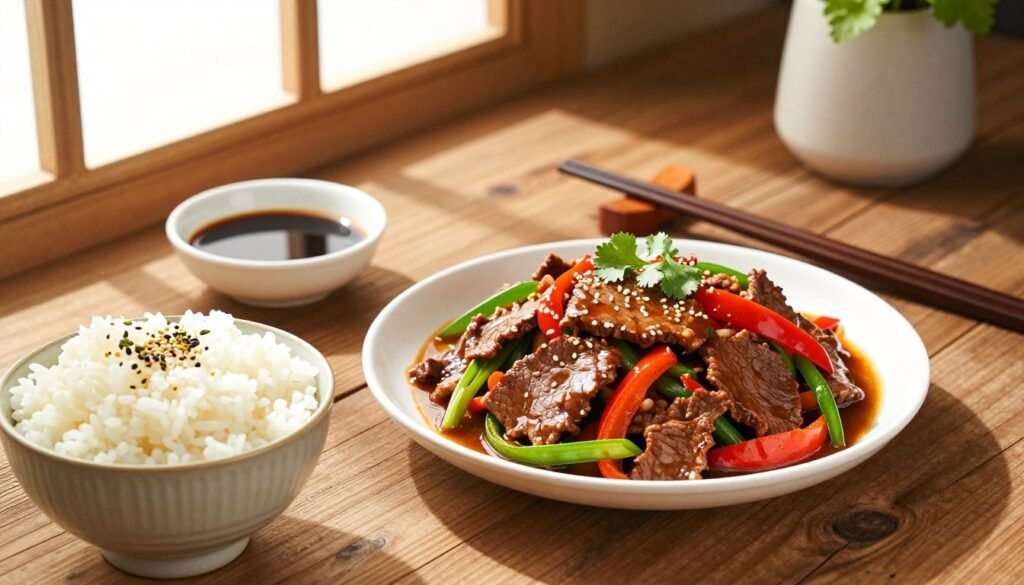
Turning a simple dish into a feast is more than just cooking. The right sides and presentation make all the difference. Each bite becomes special when you plate it well. Choosing the right accompaniments ensures you enjoy every drop of your savory sauce.
Choosing the Best Rice or Noodle Base
The foundation of your meal is key. Steamed jasmine rice is a classic choice, balancing the rich beef with its light, floral aroma. Brown rice or quinoa offer a healthier twist with more texture.
For noodle lovers, thin rice vermicelli or chewy udon noodles are great. They soak up the glaze, ensuring no flavor is wasted. Serve your base hot for the best temperature contrast with the stir-fried beef.
Complementary Side Dishes for a Complete Meal
Pair your beef with sides for a balanced dinner. A crisp cucumber salad with rice vinegar and chili oil offers a cooling effect. Steamed bok choy or blanched broccoli add color and fiber.
For more substance, try vegetable spring rolls or potstickers. They add crunch that complements the tender beef. Simple sides let the main dish shine.
Presentation Tips for Restaurant-Quality Results
Visual appeal is crucial for a professional-looking meal. Start with a sprinkle of green onions for a fresh bite. Toasted sesame seeds add delicate nuttiness and contrast beautifully.
Serve in a wide, shallow bowl to show off the colors. A clean rim and thoughtful beef arrangement make your dinner look like it’s from a high-end kitchen. These details turn a standard meal into an impressive culinary experience.
Troubleshooting Common Stir Fry Challenges
Even the most skilled home cooks face challenges when making a stir fry. Whether it’s an easy mongolian beef recipe or trying new flavors, small problems are part of learning. With a few tweaks, you can often save your dish.
Fixing a Sauce That Is Too Thin or Thick
A sauce that’s not the right consistency can mess up your dish. If it’s too thin, it won’t stick to the meat well.
- To thicken: Mix one teaspoon of cornstarch with two teaspoons of cold water. Stir this into your sauce slowly until it’s thick enough.
- To thin: If your sauce is too thick, add a tablespoon of water or beef broth at a time. Stir well until it’s smooth and pourable again.
Preventing Tough or Chewy Meat
Tough meat is a common problem, but it’s usually preventable. Always cut your beef against the grain for tender bites in your spicy mongolian beef.
“The secret to tender stir-fry meat lies in the initial preparation and the speed of the sear. Do not crowd the pan, or the meat will steam instead of browning.”
If your meat is still chewy, it might be overcooked. Thin slices of beef cook fast, so keep the heat high and cooking time short for tender meat.
Handling Burnt Aromatics and Overcooked Vegetables
Burnt garlic or ginger can ruin your mongolian beef stir fry recipe. If your aromatics are getting too dark, take the pan off the heat and add a bit of liquid to cool it down.
To avoid overcooked veggies, add them to the wok in stages. Put harder veggies like carrots in first, and add delicate greens last. Timing is everything for that perfect texture.
Conclusion
You now know how to make a top-notch meal at home. Focus on preparation and heat control to make the best mongolian beef. This way, you can impress your family every time.
Using fresh ingredients and simple methods beats takeout any day. You’ll save money and ensure every bite is of high quality. This makes your meals special and satisfying.
Be proud of mastering the mix of savory and sweet flavors. The more you cook, the better you’ll get. Your dishes will always be a hit.
Invite friends over for a dinner party with this dish. Your dedication to making the best mongolian beef makes every meal unforgettable. It’s a chance to share your culinary skills and joy.
What is the best cut of meat for an authentic mongolian beef recipe?
For a truly authentic mongolian beef recipe, flank steak is the preferred choice due to its lean texture and ability to soak up flavors. However, you can also use top sirloin or even ribeye if you prefer a higher fat content in your homemade mongolian beef.
How do I make a spicy mongolian beef version?
To create a spicy mongolian beef, simply add 1-2 tablespoons of Huy Fong Foods Chili Garlic Sauce or several dried red Thai chilies to the pan when sautéing your ginger and garlic. This adds a heat that perfectly complements the sweetness of the best mongolian beef recipe.
Why is my mongolian beef stir fry recipe ending up soggy instead of crispy?
Sogginess usually occurs when the pan is overcrowded. To ensure a crispy mongolian beef, sear the meat in small batches using high heat in a Lodge cast-iron skillet or a wok. This allows the moisture to evaporate instantly rather than steaming the meat.
Is this a traditional mongolian beef recipe from Mongolia?
No, despite the name, it is not a traditional mongolian beef recipe from Mongolia. The dish was actually invented in Taiwan and is a hallmark of authentic chinese mongolian beef served in international and Chinese-American restaurants.
Can I prepare this easy mongolian beef recipe in advance?
While the actual stir-frying should be done right before serving, you can do all the prep work ahead of time. You can slice and velvet the meat, chop the aromatics, and whisk the sauce ingredients together hours in advance, making this an exceptionally easy mongolian beef recipe for hosting guests.
What brands of soy sauce do you recommend for the best flavor?
For a consistent and high-quality savory base, Kikkoman is the gold standard for most home cooks. If you are looking for a deeper color and richer umami, you might also try Lee Kum Kee dark soy sauce as part of your mongolian beef stir fry recipe.