
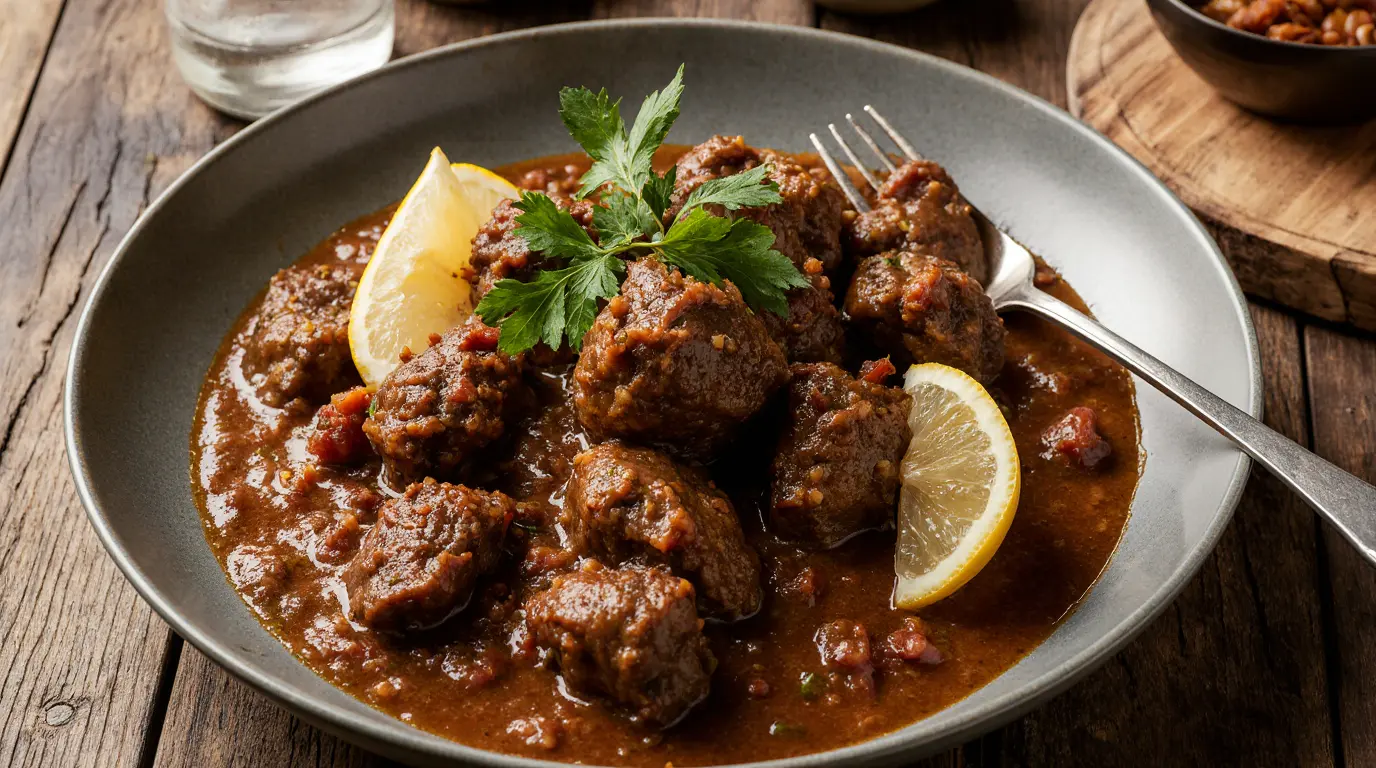
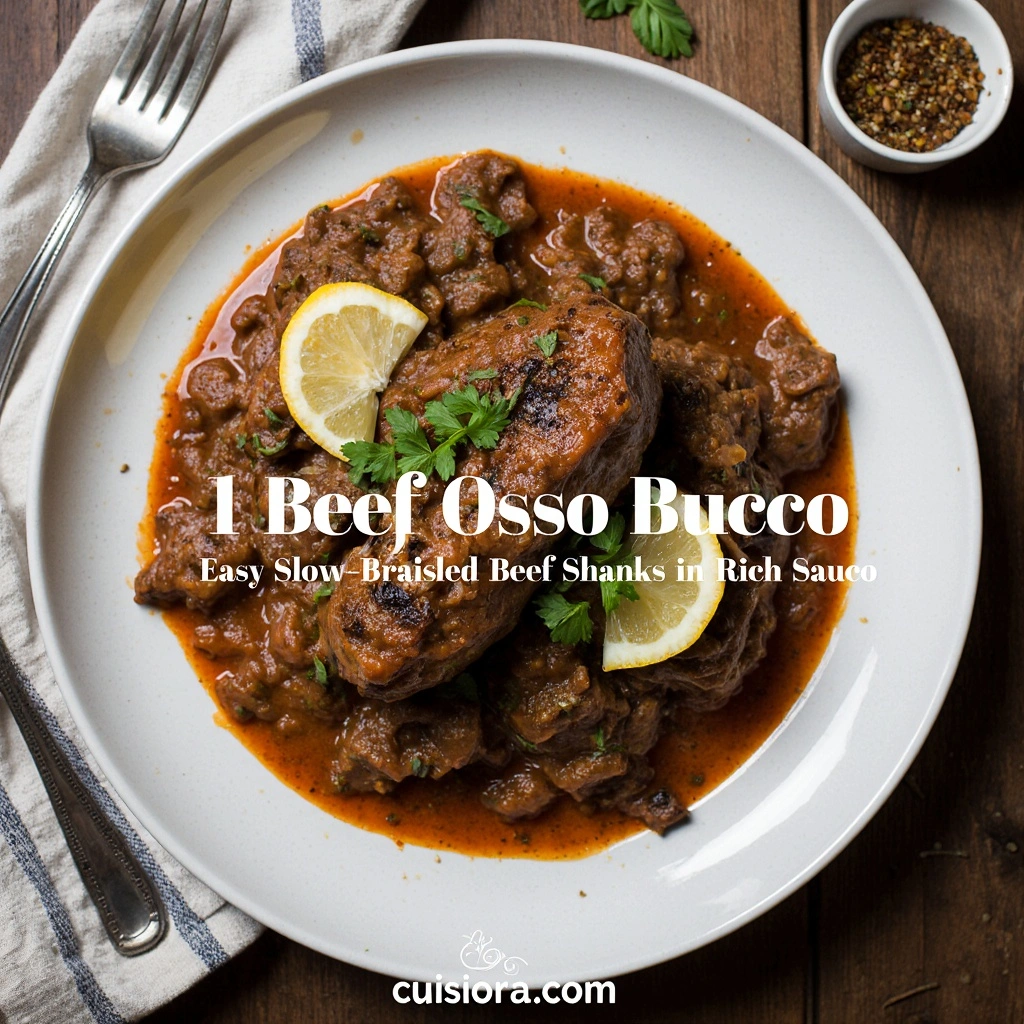
Beef Osso Bucco Recipe: Easy Slow-Braised Italian Beef Shanks in Rich Sauce
There are dishes that fill a kitchen with warmth before anyone even sits down to eat — and Beef Osso Bucco Recipe is absolutely one of them. The moment those shanks hit a hot pan, something almost magical happens. The sizzle, the caramelized crust forming along the edges, the rich aroma curling through the air — it signals that something slow, something deeply satisfying, is on its way.
This beef osso bucco recipe brings the soul of Northern Italy straight to your dinner table, without demanding a chef’s budget or a culinary school diploma. Whether it is a Sunday family meal or a cozy weeknight dinner you have been thinking about all day, this dish delivers every single time.
What Does “Osso Buco” Actually Mean?
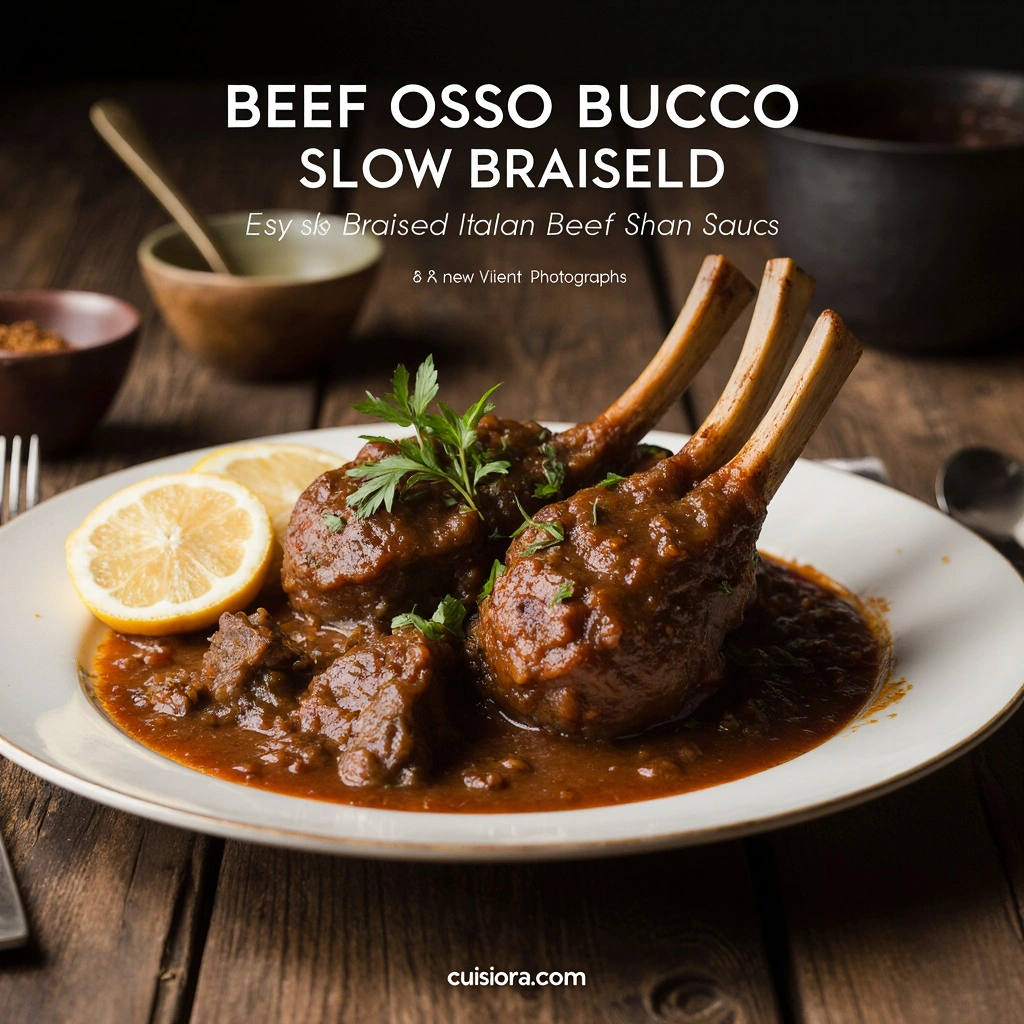
The name comes straight from Italian — osso means “bone” and buco means “hole.” Together, they point directly at the hollow bone at the center of each shank cut, where the prized bone marrow lives. That marrow slowly melts into the braising liquid as the dish cooks, giving the sauce its signature body and depth.
Historically, osso buco traces its roots back to 19th-century Milan, where home cooks in Northern Italy developed the technique as a way to transform tough, inexpensive cuts of meat into something extraordinary through long, slow cooking. The original recipe called for veal shanks, but over time — and across many kitchens — beef shanks became a popular and more affordable alternative, especially for feeding a family without stretching the budget too thin.
Why Beef Shanks Instead of Veal?
Veal is the traditional choice, no question about it. But beef shanks bring their own richness to the table, and at a fraction of the cost. The meat is slightly more robust in flavor, which actually works beautifully with the braising liquid. For families cooking on a budget, or anyone who simply finds veal harder to source, beef is not a compromise — it is a practical and equally delicious choice.
When shopping, look for cross-cut beef shanks about 3 to 4 inches thick. Thicker cuts hold up better through the long cook time and tend to stay moist and flavorful rather than drying out.
Key Ingredients for Beef Osso Buco
Good ingredients do most of the heavy lifting here. The list is simple, which means quality matters.
- Beef shanks – cross-cut, 3 to 4 inches thick
- Butter – for browning and sautéing; it adds a richness that oil alone cannot replicate
- Minced garlic – two to three cloves, finely minced
- Large white onion – sliced into rings
- Carrots – diced medium
- Dry white wine – a good pour that deglazes the pan and lifts all those browned bits; chicken broth works as a non-alcoholic substitute
- Beef stock – the backbone of the braising liquid
- Chopped tomatoes – canned or fresh, roughly chopped
- Salt and pepper – season generously throughout the process
For those following a low-carb or gluten-free diet, this recipe adapts easily. Simply skip the flour dredging step before browning, and every other ingredient falls naturally within those guidelines.
How to Make Beef Osso Buco – Step by Step
1. Prepare the Meat
Pat the beef shanks dry with a paper towel — this is non-negotiable for a good sear. If you want a slightly thicker sauce and do not have dietary restrictions, lightly dredge each piece in flour and shake off the excess. This creates a coating that helps develop a deeper crust and naturally thickens the braising liquid. Skip this step entirely for a low-carb version; the results are still excellent.
2. Brown the Shanks
Melt a generous knob of butter in a heavy-bottomed pot or Dutch oven over medium-high heat. Once the butter foams and begins to brown slightly, lay in the shanks — do not crowd the pan. Brown each side for about three to four minutes until a deep golden crust forms. Remove and set aside. This step is the foundation of the dish’s flavor, so resist the urge to rush it.
3. Sauté the Vegetables
In the same pot, without cleaning it, add a little more butter if needed and toss in the onions, carrots, and garlic. Cook over medium heat for five to seven minutes, stirring occasionally, until the vegetables have softened and the garlic is fragrant. The remnants from browning the meat coat everything and build flavor with every stir.
4. Deglaze the Pan
Pour in the white wine and let it bubble up energetically, using a wooden spoon to scrape every bit of the browned crust from the bottom of the pot. This step — deglazing — is where so much of the flavor lives. Let the wine reduce by about half before adding the beef stock and chopped tomatoes.
5. Braise Low and Slow
Return the browned shanks to the pot, nestling them into the liquid. The braising liquid should come close to — ideally just covering — the meat. Season with salt and pepper, then choose your cooking method.
Cooking Methods: Oven, Stovetop, or Slow Cooker
Oven (Recommended): Cover with a tight-fitting lid and cook at 300°F (150°C) for 4 to 5 hours. The low, steady heat of the oven wraps around the pot evenly, producing meat that is genuinely velvety and collagen-rich sauce that clings to every bite.
Stovetop: Keep the pot on a low simmer, covered, for 2 to 3 hours. Stir occasionally and check that the liquid level stays consistent, adding a splash of stock if it reduces too much.
Slow Cooker: Transfer everything to the slow cooker after deglazing and cook on low for 6 hours. This method is ideal for busy days — everything goes in before work, and dinner is ready by the time you are home.
Tips for the Best Result
The ideal texture is meat that surrenders completely at the touch of a fork — silky, rich, and falling cleanly away from the bone. If you prefer something with a bit more structure and a firmer bite, pull the pot from the heat about 45 minutes earlier.
One finishing touch that elevates this dish considerably is gremolata — a simple mixture of fresh lemon zest, minced garlic, and chopped flat-leaf parsley. Scattered over the top just before serving, it cuts through the richness of the braise with brightness and freshness. It is the traditional accompaniment for good reason.
What to Serve with Beef Osso Buco
The braising sauce is too good to let go to waste, so you want something underneath that absorbs it generously. Creamy mashed potatoes are the most comforting choice, but soft polenta is arguably the more traditional pairing. Roasted vegetables — carrots, parsnips, or fennel — work well for a lighter plate.
Pour a glass of something good alongside. A full-bodied red wine pairs naturally with the depth of the braised beef, though even a simple juice or sparkling water with lemon lets the dish speak for itself after a long day.
This beef osso bucco recipe is exactly the kind of cooking that rewards patience — not skill, not a long list of specialty tools, and not an expensive cut of meat. Just time, a good pot, and a handful of honest ingredients working together. That, in the end, is what Italian home cooking has always been about.