
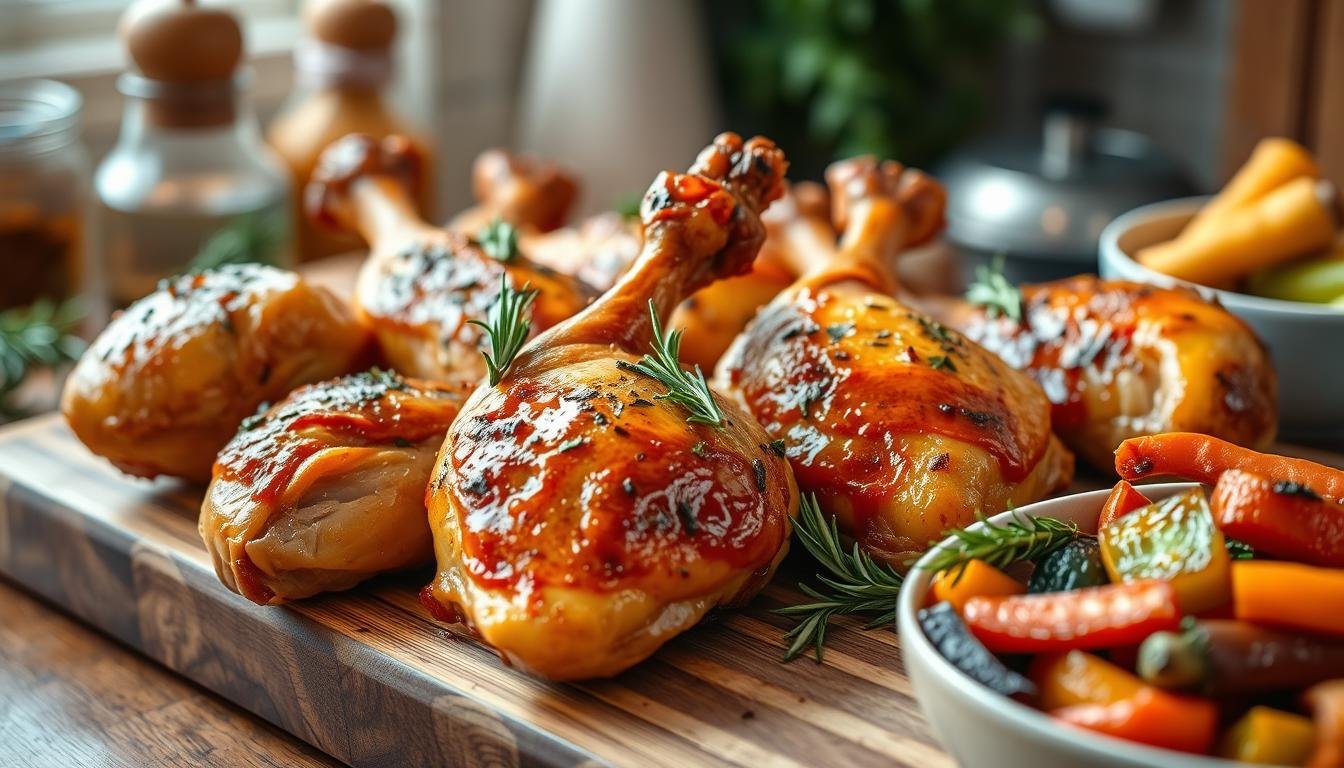
Learn how to bake chicken legs and thighs for a juicy and delicious meal.
Coming home after a long day, we all want a quick, healthy meal. A baked chicken legs and thighs dish is just what you need. This baked chicken legs and thighs recipe is comforting, easy to make, and perfect for busy evenings when you want something simple but satisfying.
This reliable method for baked chicken legs and thighs turns simple ingredients into a delicious dish. Dark meat stays tender even if you’re new to baking, making baked chicken legs and thighs a beginner-friendly option. This juicy chicken recipe is easy to make and delivers amazing flavor every time.
It’s the ideal easy weeknight dinner for anyone who loves tasty food without the hassle. Choosing baked chicken legs and thighs guarantees a moist, flavorful meal every time. Let’s go through the steps to make a dinner that’s both special and easy using baked chicken legs and thighs.
Selecting the Best Cuts of Chicken
Your journey to a perfect dinner starts at the meat counter when preparing leg quarters in oven. Knowing the best chicken cuts turns a simple recipe into a culinary success. The right choice ensures your leg quarters in oven turn out tender, juicy, and full of flavor.
Understanding the Difference Between Legs and Thighs
Leg quarters in oven are both dark meat, making them ideal for oven cooking. The legs are firmer and fun to eat, while the thighs contain more fat, helping leg quarters in oven stay moist even when baked for longer periods.
Leg quarters in oven are rich in flavor, making them perfect for an easy weeknight dinner. They handle spice rubs and high-heat roasting very well without drying out, which makes leg quarters in oven a reliable choice for consistent, tasty results.
Choosing Between Bone-in and Boneless Options
For leg quarters in oven, bone-in cuts are ideal for achieving succulent results. The bone helps insulate the meat from direct oven heat, allowing leg quarters in oven to stay juicy and cook more evenly throughout.
For leg quarters in oven, boneless options cook faster but tend to lose moisture more quickly. For consistent quality, bone-in pieces are the better choice, as leg quarters in oven benefit from the bone adding deeper, more savory flavor and helping retain juiciness during cooking.
Identifying Quality Indicators at the Grocery Store
Before preparing leg quarters in oven, check the packaging for freshness signs when buying. Look for chicken with a pinkish hue and firm, plump skin. Avoid packages with excessive liquid, as this can indicate that leg quarters in oven may have been previously frozen or not handled properly.
Before cooking leg quarters in oven, always check the sell-by date to ensure you’re getting the freshest product. Paying attention to these small details helps guarantee that leg quarters in oven will deliver the best flavor and quality in your next meal.
Preparing Your Chicken for the Oven
Great results in the kitchen start long before you heat up your chicken. Even with the best chicken cuts, how you handle the raw ingredients matters a lot. Taking a few extra minutes to prep your meat ensures it cooks evenly and tastes its best.
Proper Thawing Techniques for Frozen Poultry
When preparing chicken legs oven, safe poultry thawing techniques are essential to avoid harmful bacteria. Always thaw frozen chicken in the refrigerator instead of leaving it on the counter. This slow, controlled thaw helps keep chicken legs oven safe to eat and prevents uneven cooking.
When preparing chicken legs oven, if you’re in a rush you can thaw the chicken in cold water. Change the water every 30 minutes to keep it safely chilled. Never use warm water, as it increases the risk of bacteria growth on the surface of chicken legs oven.
Cleaning and Patting Dry for Crispy Skin
For chicken legs oven, moisture is the enemy of crispy chicken skin. After removing the chicken from its packaging, pat it completely dry with paper towels. This step helps chicken legs oven skin render its fat properly during baking, resulting in a crispier texture.
For chicken legs oven, avoid rinsing the chicken under the faucet, as it can spread bacteria around your kitchen. Instead, simply pat the surface dry with paper towels before seasoning. This simple step helps chicken legs oven skin crisp better and significantly improves the final texture of the meal.
Trimming Excess Fat and Skin
While fat adds flavor, too much can make your dish greasy. Use a sharp knife to trim away excess skin or fat. This helps the heat circulate better around the meat.
By balancing the fat, your seasoning sticks better to the meat. This makes your dish more flavorful and looks cleaner. Check the table below for a quick guide on poultry prep.
| Preparation Step | Primary Goal | Key Benefit |
|---|---|---|
| Thawing | Safety | Prevents cold spots |
| Patting Dry | Texture | Ensures crispy chicken skin |
| Trimming | Flavor Balance | Improves heat distribution |
Creating the Perfect Dry Rub or Marinade
For chicken legs oven, choosing between a dry rub and a marinade changes your dish’s flavor. Knowing how to season chicken well allows you to build deep, rich taste profiles. Whether you want crispy or tender results, proper seasoning is key when preparing chicken legs oven.
Essential Spices for Classic Baked Chicken
A great dry rub for chicken legs oven needs salt, sweetness, and heat. Start with kosher salt and black pepper to enhance the natural flavor. Add garlic powder, onion powder, and smoked paprika to give chicken legs oven a rich taste and a beautifully golden color when baked.
For chicken legs oven, you can enhance the flavor by adding thyme, rosemary, or oregano. These herbs adhere well to the skin and help form a flavorful crust. Make sure your spices are fresh to ensure chicken legs oven delivers the best, most vibrant taste.
Balancing Acid and Oil in Marinades
For a wet soak, follow these chicken marinade tips. A good marinade has acid, fat, and aromatics. Acid, like lemon juice or vinegar, tenderizes the meat.
The oil carries flavors, making them spread evenly. Use three parts oil to one part acid. This keeps the meat tender and adds a delightful tang.
How Long to Marinate for Maximum Flavor
Timing is key when using liquid ingredients. Don’t marinate too long, as it can make the meat mushy. Aim for two to four hours in the fridge.
Even thirty minutes can make a big flavor difference. Always keep chicken covered and chilled for safety. These chicken marinade tips ensure delicious results every time.
Mastering the Art of Baked Chicken Legs and Thighs
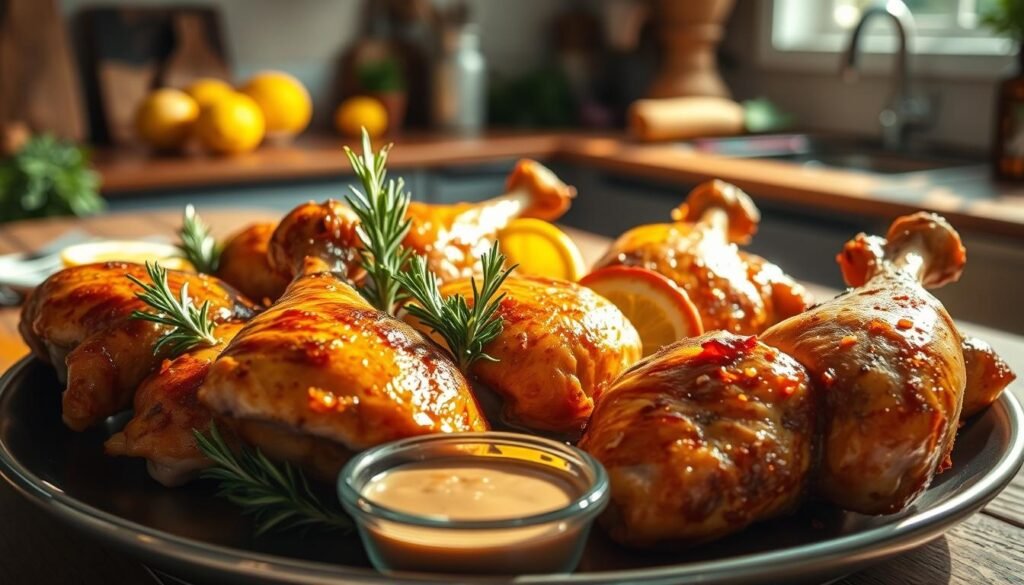
Getting your oven just right is key to cooking like a pro at home. When baking baked chicken legs and thighs, controlling the heat is crucial. This ensures the meat stays juicy and tender.
Setting the Ideal Oven Temperature
For top-notch oven baked chicken, aim for a temperature of 400°F to 425°F. This high heat crisps the skin and cooks the meat evenly. Lower temperatures can make the skin rubbery, ruining the dish.
“The secret to a perfect roast is not just the seasoning, but the steady, high-heat environment that allows the skin to crisp while the juices remain locked inside the meat.”
Using the Right Baking Sheet or Dish
Picking the right dish is crucial for chicken meal prep. A rimmed baking sheet is best because it lets air circulate. If you use a casserole dish, make sure it’s not too full. This prevents steam from trapping and stops the skin from browning.
| Vessel Type | Best For | Heat Circulation |
|---|---|---|
| Rimmed Baking Sheet | Crispy Skin | Excellent |
| Glass Casserole Dish | Juicy/Saucy Meat | Moderate |
| Cast Iron Skillet | Even Browning | High |
Arranging Chicken for Even Heat Distribution
How you place your bone-in chicken thighs and legs is key for even cooking. Place them in a single layer, leaving at least an inch of space. This stops them from steaming each other, which can cause uneven cooking.
When cooking a lot, don’t stack the meat. Consistent airflow is vital for even cooking. By following these tips, you’ll get great results every time you bake.
Achieving Crispy Skin Without Deep Frying
You don’t need a deep fryer for crispy chicken skin at home. Your oven can do the job. With the right prep and cooking, your oven baked chicken will be golden and crackly.
The Role of Baking Powder in Texture
A light dusting of baking powder is a secret for texture. When you use a dry rub for chicken, baking powder helps. It draws moisture out of the skin, making it brown and crisp faster.
“The secret to the perfect roast is not just the heat, but the management of moisture on the surface of the meat.”
Utilizing a Wire Rack for Airflow
Chicken on a baking sheet can get soggy. Use a wire rack in your pan instead. It lets air circulate around the meat, making the bottom skin crispy too.
Remember, the roasting chicken temperature is key. High heat melts fat under the skin, not making it rubbery. This mix of heat and elevation is crucial for great results.
Broiling Techniques for a Golden Finish
If your chicken looks a bit pale, try broiling chicken. Move the rack to the top and broil for two to three minutes. Watch it closely to avoid burning.
This quick heat makes the surface golden and golden-brown. With these tips, your cooking will improve a lot.
Monitoring Internal Temperature for Safety and Juiciness
Getting the perfect poultry at home is all about precision. Many recipes give a time frame, but time alone can’t guarantee success. Oven settings and chicken size can change cooking times for baked chicken legs and thighs.
Why Internal Temperature Matters More Than Time
Tracking the internal temperature for chicken is key for a safe and juicy meal. Time is just a guess, but temperature tells you if it’s done right. This way, you avoid overcooking, which makes meat dry and tough.
Using a Digital Meat Thermometer Correctly
Using a meat thermometer right is crucial for accurate readings. Stick the probe into the thickest part of the meat, away from bones. For multiple pieces, check a few to make sure they’re all cooked evenly.
Understanding the USDA Guidelines for Poultry
Sticking to safety standards is important for every cook. The USDA sets guidelines to kill bacteria and keep meat quality high. Remember these key points:
- Always aim for a minimum internal temperature of 165°F (74°C).
- Check the thickest part of the thigh, as this area takes the longest to reach the target heat.
- Ensure your thermometer is calibrated correctly for the most precise results.
Mastering these methods means you can cook baked chicken legs and thighs perfectly. Regular meat thermometer usage makes cooking a breeze. You’ll always hit the mark for a juicy, tasty dinner.
Resting Your Chicken for Optimal Moisture
To make a juicy chicken recipe, you need more than just seasoning and heat. Many cooks serve their chicken too soon, leading to dry meat. But, taking a short break before carving makes your chicken taste like a pro’s.
The Science Behind Resting Meat
High heat makes chicken’s muscle fibers contract, pushing moisture to the center. If you cut into it right away, those juices spill out. Knowing resting meat science helps keep those juices inside the chicken.
“Resting allows the juices to redistribute throughout the meat, ensuring every bite is as succulent as the first.”
How Long to Let Chicken Rest Before Serving
The rest time varies with the chicken size. For standard chicken legs and thighs, rest for five to ten minutes. Bigger cuts might need a few more minutes to stabilize the temperature.
Timing is key for chicken meal prep. A short wait ensures your leftovers stay tender when reheated later.
Preventing Moisture Loss During the Resting Phase
To keep your chicken warm while it rests, follow a few tips. Exposing it to cool air can make it lose heat and texture.
- Loosely tent the chicken with a piece of aluminum foil to trap heat.
- Avoid wrapping the foil too tightly, as this can create steam and make the skin soggy.
- Place the chicken on a warm plate or a clean cutting board away from cold drafts.
By following these steps, your hard work in the kitchen will pay off. A little patience makes your meal delicious and moist.
Flavor Variations and Global Inspirations
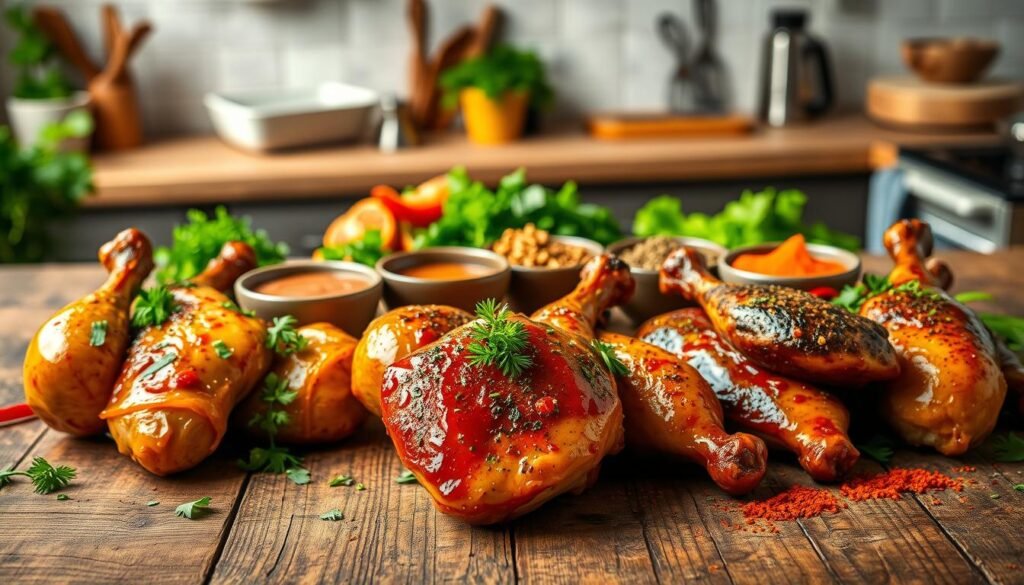
Your next healthy chicken dinner can be a journey around the world. Learning how to season chicken lets you turn simple chicken into a gourmet meal. By trying different spices, your meals stay exciting and new.
Mediterranean Herb and Lemon Profiles
The Mediterranean style uses bright, clean flavors that show off the chicken’s natural taste. Mix dried oregano, thyme, and rosemary with fresh lemon zest for a light, fragrant crust. Use high-quality olive oil to help the herbs stick to the chicken.
“Cooking is like painting or writing a song. Just as there are only so many notes or colors, there are only so many flavors—it’s how you combine them that sets you apart.”Spicy Cajun and Southern Style Seasonings
For a bolder taste, try the rich flavors of global chicken flavors. A Cajun rub has paprika, cayenne pepper, garlic powder, and onion powder. This mix makes a deep, spicy crust.
For the best flavor, rub the spices under the skin and on top. This lets the spices soak into the meat while it bakes. Serve with a cool side, like cucumber salad or coleslaw, to balance the heat.
Sweet and Savory Glazes for Sticky Chicken
For a sticky finish, choose your glaze ingredients carefully. Use honey, maple syrup, or brown sugar glazes in the last ten minutes of baking. This avoids burnt sugars and ensures the chicken is cooked right.
- Honey Garlic: A sweet and savory mix.
- Balsamic Glaze: Adds a tangy, caramelized flavor.
- Apricot Mustard: Offers a fruity taste that’s great with roasted legs.
Watch your oven closely when using sweet glazes. A quick sauce brush near the end makes the chicken irresistibly sticky.
Common Mistakes to Avoid When Baking Chicken
Even the most skilled home cooks can make mistakes when cooking chicken. Knowing these chicken cooking mistakes helps you fix them and get great results every time.
Preventing Dry or Overcooked Meat
One big mistake is cooking the meat too long. Not using a meat thermometer can lead to dry chicken, ruining your juicy chicken recipe.
Always use a meat thermometer to check the internal temperature for chicken. Make sure it reaches a safe temperature without going over.
Avoiding Soggy Skin Issues
Many struggle with soft or rubbery chicken skin instead of crispy. This often happens when the chicken is too close together or too wet before baking.
To fix soggy skin, try broiling chicken for the last two minutes. This high heat gives a crispy finish without drying out the meat.
Troubleshooting Uneven Cooking Problems
Uneven cooking can come from bad thawing methods. If chicken is still frozen when baked, the outside gets too hot while the inside stays raw.
Make sure all chicken pieces are the same size and spread out on the baking sheet. Good airflow is key for even cooking, so don’t overcrowd the pan.
Conclusion
Learning to cook chicken in the oven is a skill that makes your meals better. Now, you know how to make a delicious oven baked chicken that everyone will love.
Understanding meat science helps your chicken stay tender and juicy. By following these tips, you can avoid mistakes that make chicken dry or uneven.
Trying different chicken flavors keeps your meals exciting. Whether you use Mediterranean herbs or Cajun spices, your kitchen will be full of creativity.
Making a healthy chicken dinner is easy with these techniques. Start with good bone-in chicken thighs for the best taste. These steps will help you become a better home chef.
Share your favorite chicken recipes with friends or try something new this weekend. Cooking like a pro at home will wow your guests. Enjoy making tasty meals in your kitchen.
FAQ
Why should I choose bone-in chicken thighs over boneless cuts for my juicy chicken recipe?
Bone-in chicken thighs keep the meat moist during roasting. The bone helps cook the meat evenly. The connective tissue and fat prevent drying out, making the meat tender and flavorful.
What is the best way to prepare poultry to ensure crispy chicken skin?
To get crispy chicken skin, remove all moisture first. Pat the chicken dry with paper towels. Then, lightly coat the skin in oil and baking powder for a crispy crust.
What is the ideal roasting chicken temperature for an easy weeknight dinner?
Roast at 400°F (204°C) for quick and quality results. This temperature crisps the skin and keeps the meat juicy. Use a baking sheet or Pyrex dish for even heat.
How can I use a meat thermometer to ensure my chicken is safe to eat?
Use a meat thermometer to check the chicken’s safety and juiciness. Insert it into the thickest part of the thigh, avoiding the bone. The chicken must reach 165°F (74°C) to be safe.
Does using a wire rack really make a difference when baking chicken legs and thighs?
Yes, a wire rack makes a big difference. It allows air to circulate around the meat, including the bottom. This prevents soggy skin and gives you a crispy finish.
How long should I let my baked chicken rest before serving?
Let the chicken rest for 5 to 10 minutes after baking. This allows the juices to redistribute, making the meat juicy and tender. Cutting into it too soon will let the juices out.
How do I balance a marinade without compromising the texture of the meat?
Balance acidic ingredients like lemon juice with oils like Bertolli Olive Oil. Avoid marinating for too long to prevent mushy meat. Aim for 2 to 4 hours for bone-in cuts.
What are the most common mistakes that lead to unevenly cooked chicken?
Uneven cooking often comes from cold poultry or crowded pans. Make sure the chicken is at room temperature and space the pieces well. This prevents steam and ensures even cooking.